Creating Contacts in CoreBridge allows you to track sales, link Companies, and take record of important information related to the Customer. Creating Contacts is a necessary step that will need to be repeated as your business expands.
Contacts can be associated with a business, or created as Personal Account Contacts.
Table of Contents
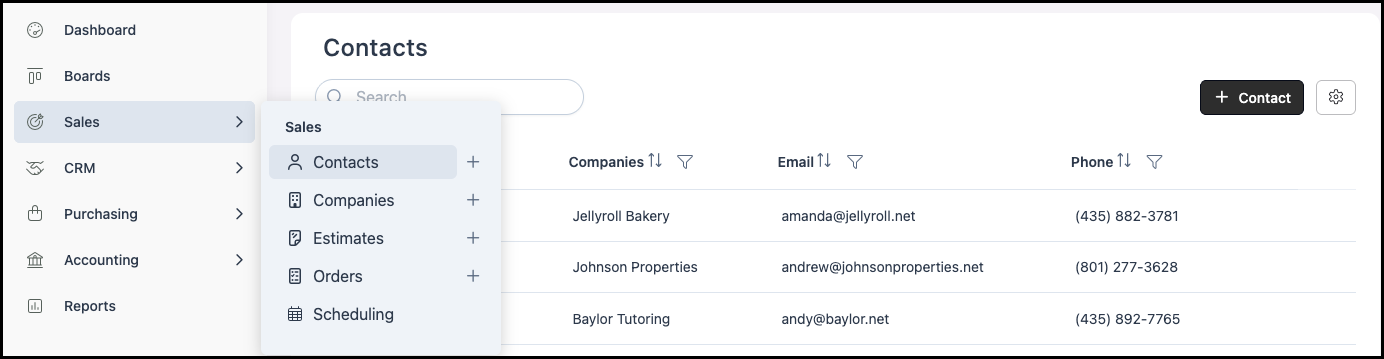
Navigate to Sales / Contacts.
Creating a Contact
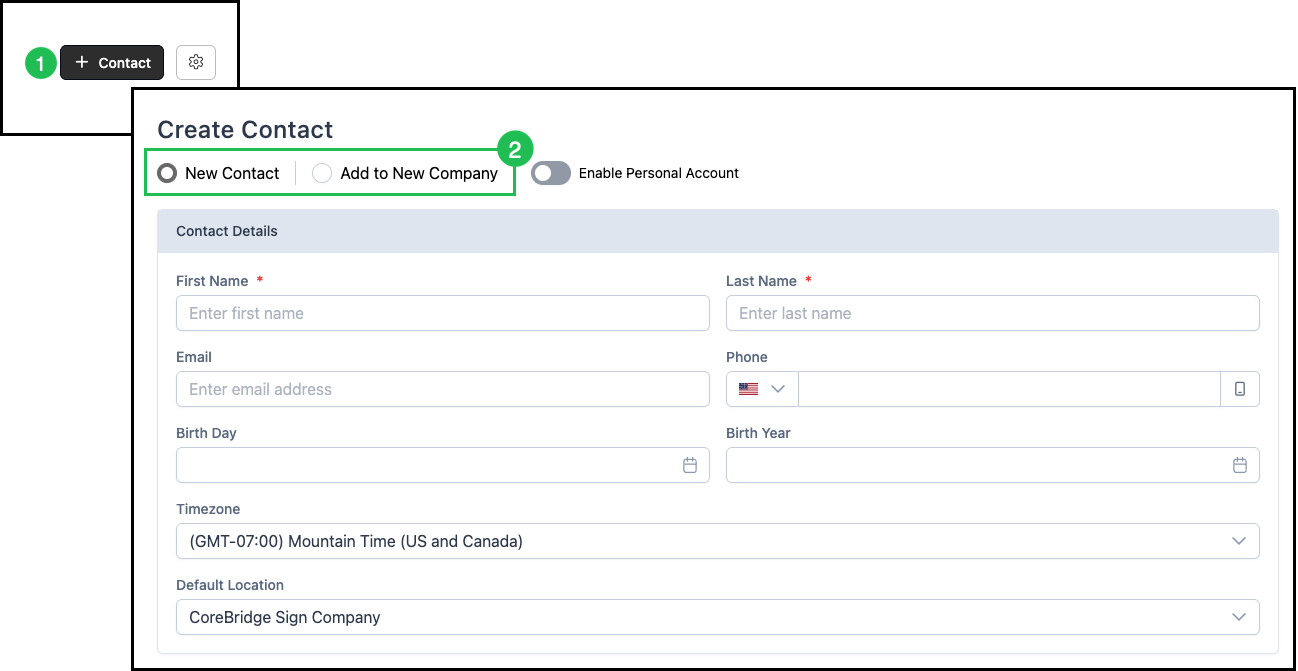
1. Click the Contact button to open the Create Contact page.
2. Choose how you want to create the Contact:
- New Contact - Create a single Contact. You can optionally link the Contact to an existing Company, or leave the Company unselected to create a standalone Contact.
- Add to New Company - Create both a new Contact (as the Primary Contact) and a new Company in one step. The form will include Primary Contact details, Billing Contact (same as Primary or separate), and Company Details.
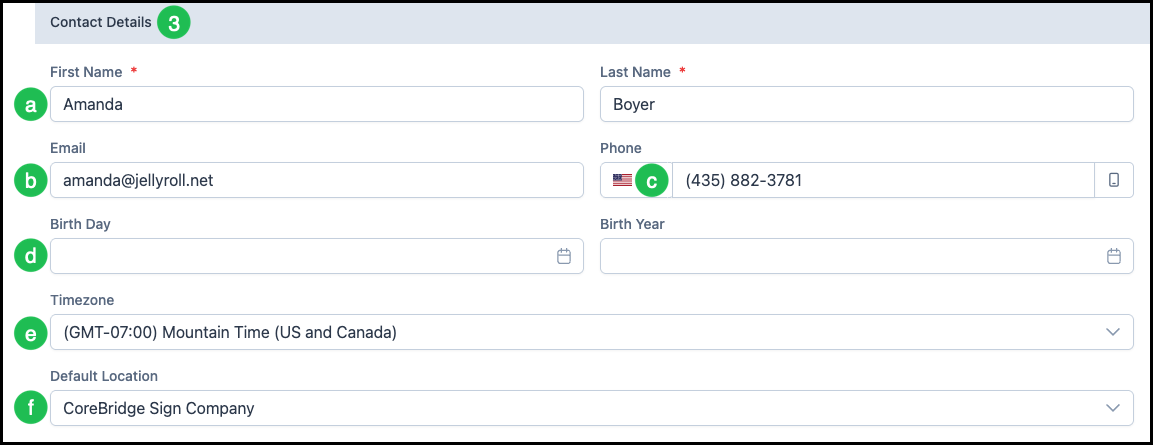
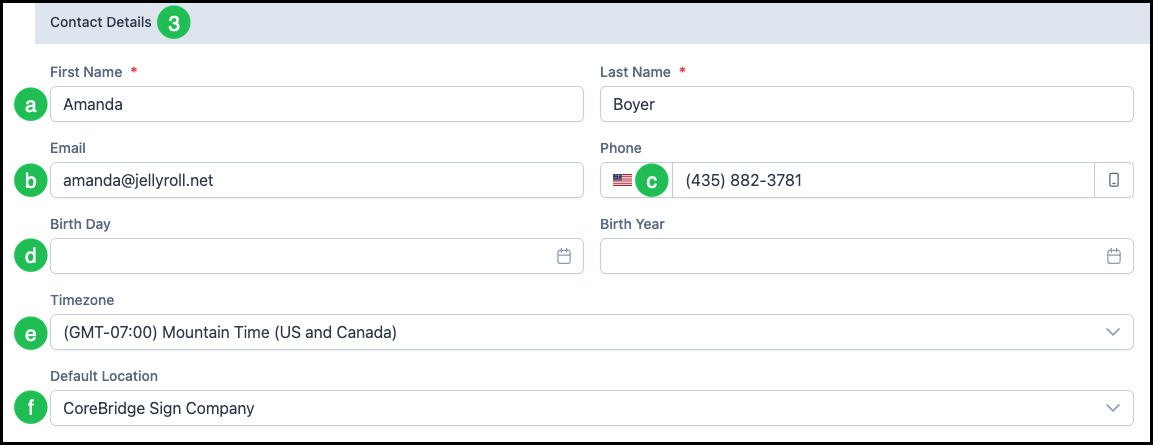
3. Enter the required Contact Details.
a. First Name and Last Name - These are required.
b. Email - Needed if the contact will use the Customer Portal.
c. Phone - Enter only numbers; the system will format the number based on Settings / System / Localization.
d. Birth Day and Birth Year - Optional; you can enter one or both.
e. Timezone - Set as needed for the contact.
f. Default Location - Set as needed for the Contact.
If you chose New Contact:
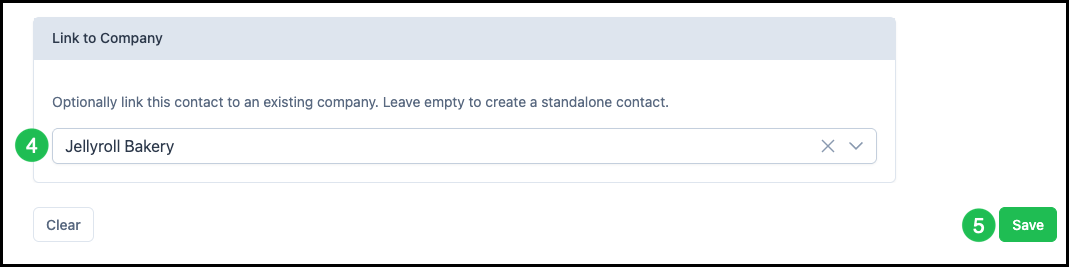
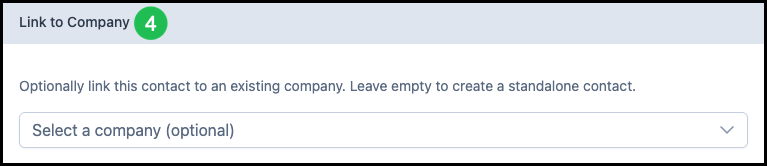
4. Use Link to Company to optionally select an existing Company. Leave this empty to create a standalone contact (no Company linked).
5. Click Save.
If you chose Add to New Company:
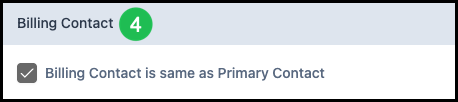
4. Select Billing Contact is same as Primary Contact, or, fill out the appropriate information for the desired Billing Contact.
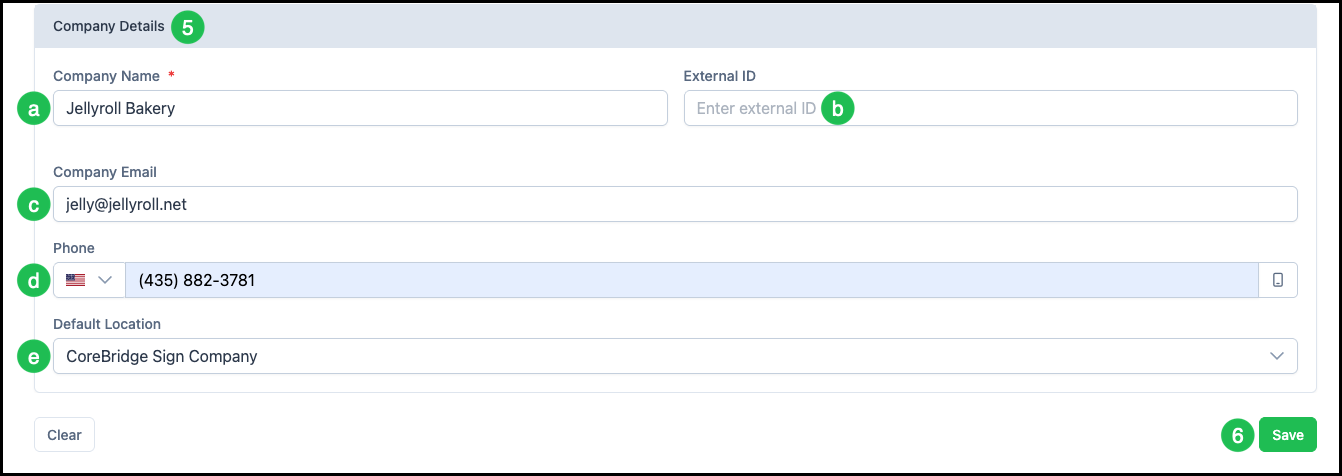
5. Complete Company Details.
a. Company Name - This is required.
b. External ID - If there is an identification number that you use to reference this Customer, it can be entered here.
c. Company Email - Main email for this Company.
d. Phone - Enter only numbers; the system will format the number based on Settings / System / Localization.
e. Default Location - Set as needed for the Company.
6. Click Save.
Note: After the Company has been created, you can go to the Company page to add and edit information for Sales Context and Accounting Details. For more information, please see Creating Companies.
Creating a Personal Account Contact
Contacts that are not linked to a Company can be created as standalone (Personal Account) Contacts.
1. Click the Contact button to open the Create Contact page.
2. Select Enable Personal Account.
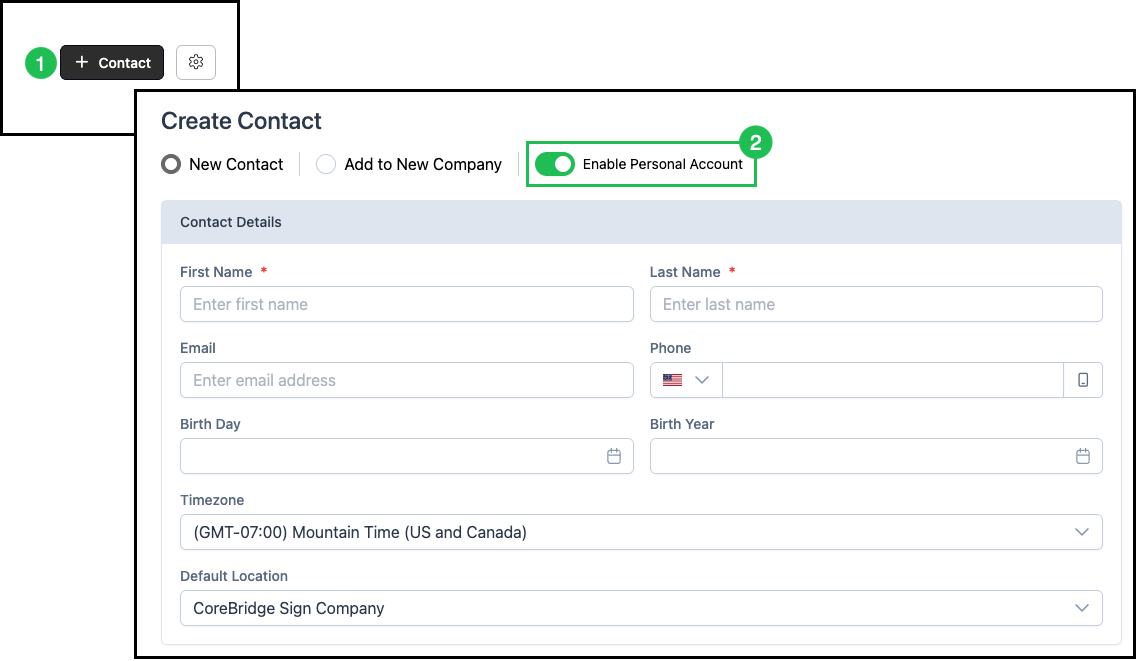
3. Enter the required Contact Details.
a. First Name and Last Name - These are required.
b. Email - Needed if the contact will use the Customer Portal.
c. Phone - Enter only numbers; the system will format the number based on Settings / System / Localization.
d. Birth Day and Birth Year - Optional; you can enter one or both.
e. Timezone - Set as needed for the contact.
f. Default Location - Set as needed for the Contact.
4. Choose a Company to associate with this Contact, or leave the field empty.
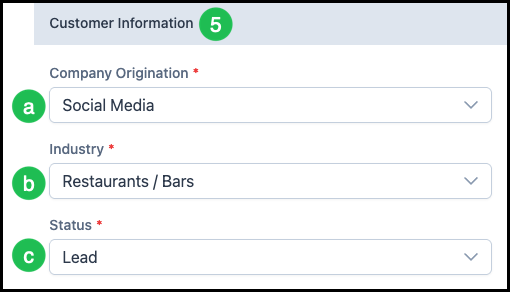
5. Enter the Customer Information.
Note: You can select which fields you would like to be required in Setting / Sales / Company Options.
a. Company Origination - How the company heard about you.
b. Industry - Which industry this company is affiliated with.
c. Status - The lifecycle of the Customer. This will automatically update as the Customer progresses, but can be manually changed using the dropdown.
Note: A newly inputted Customer will automatically be set as a Lead. Once this Customer is used in an Estimate, the status will update to Prospect. Once the Estimate had been converted into an Order, or a new Order has been created using this Customer, the status will update to Customer.
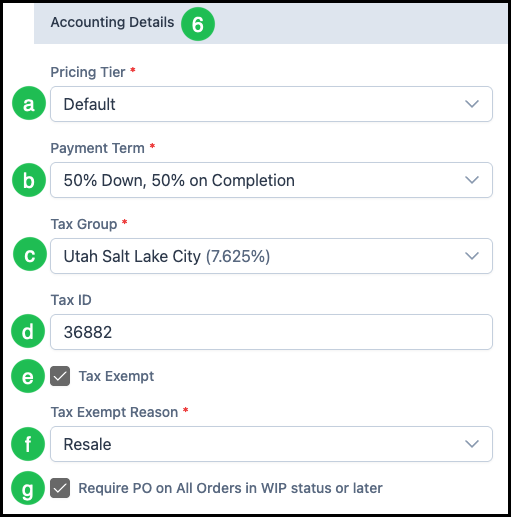
6. Input Accounting Details.
a. Pricing Tiers - Allows you to set prices based on your negotiated rates with this company.
b. Payment Terms - Define the deposit and early payment credit rules for this company.
Note: Payment Terms can be managed in Settings / Accounting / Payment Terms.
c. Tax Group - Allows you to charge a combined, single rate by grouping agencies- typically local, county, and state/province, national, etc.
d. Tax ID - Keeps a record of the business's Tax Identification if needed to verify things such as tax exemptions.
Note: You can make this field required from Settings / Sales / Estimate Options or Order Options.
e. Tax Exempt - Choose whether or not you want this company’s estimates/orders to always be Tax Exempt by default, and if so, add a Tax Exempt Reason.
f. Tax Exempt Reason - Select from a pre-created list of Tax Exempt Reasons that can be managed at any time in Settings / Sales / Reason Lists.
Note: This option will only be present if Tax Exempt has been selected.
g. Require PO on All Orders in WIP status or later - Decide if you want to require Purchase Order numbers to be entered on all orders that are a Work in Progress or further along in the workflow before the Order may be Invoiced.
Note: You can also make this setting a default from Settings / Sales / Company Options.
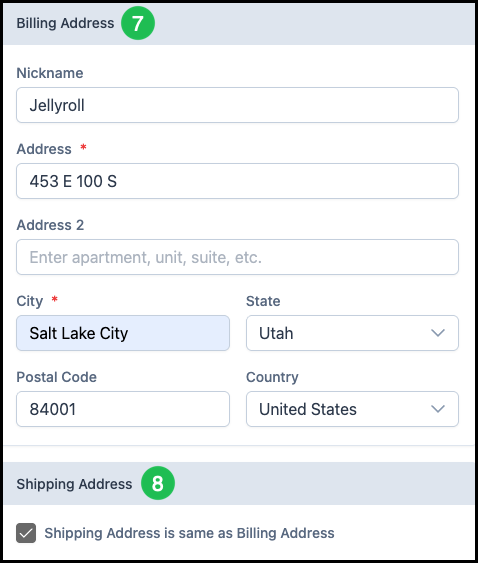
7. Input a Billing Address.
Note: You can make this a required field in Settings / Sales / Company Options.
8. Select this box if this Company has the same Billing and Shipping Address. Companies can have separate addresses by unchecking this box and filling in the appropriate Shipping Address.
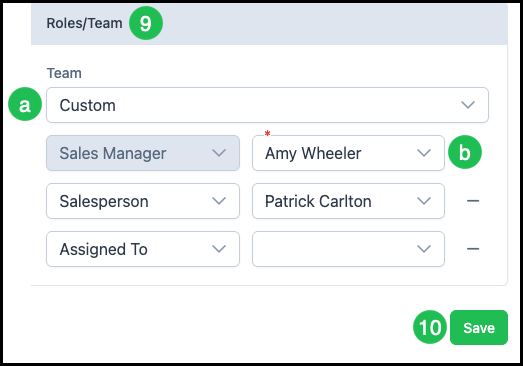
9. Input Roles.
a. If you select Custom Teams, you can add employees to Roles from this screen. If you choose a preselected Team, the Roles and employees will be auto-filled which cannot be edited at the company level.
b. Use the dropdown to select the name of your employee that will fill this role.
Note: To include the ability to create and use Employee Teams in your package, please contact sales@corebridge.net.
10. Click Save.