Estimates are quotes provided for Customers to help them understand products and pricing. No payment is taken at this stage. This is primarily for the customer's information as they progress through the lifecycle of an order.
Table of Contents
- Estimates
- Estimate Information
- Estimate Details
- Line Items Tab
- Purchase Orders Tab
- Destinations Tab
- Pricing Bar
- Roles
- Billing Address
Estimates
Navigate to Sales / Estimates.
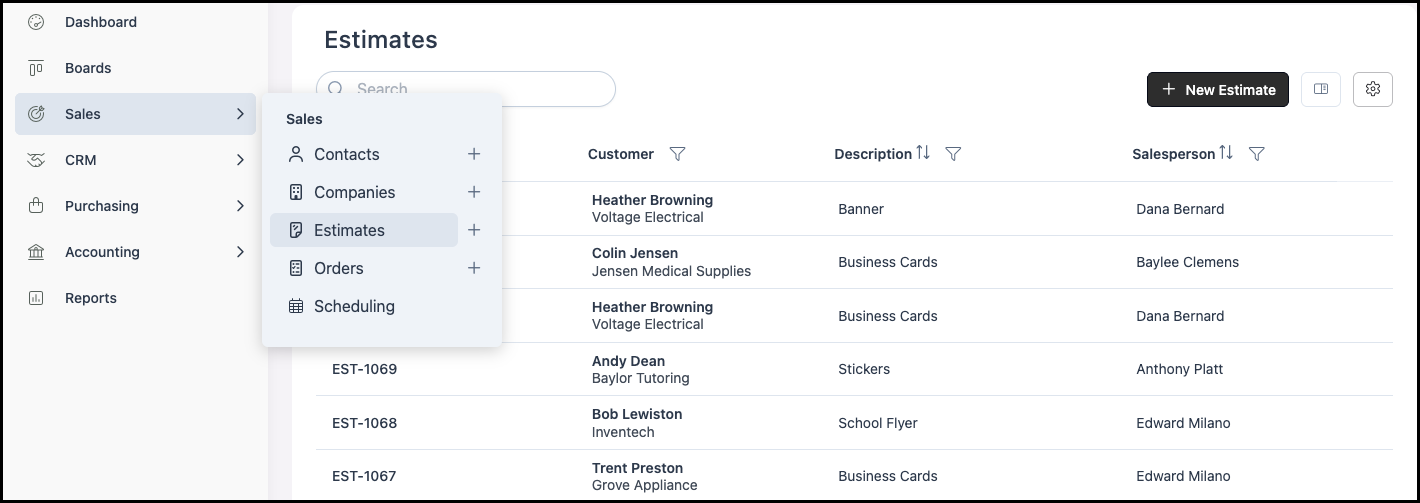
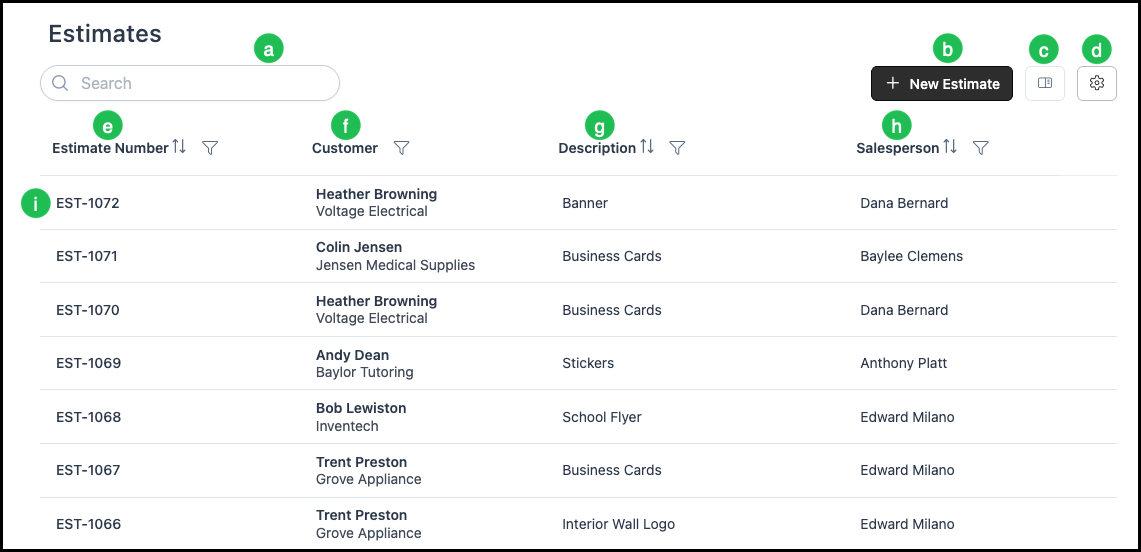
The Estimates list shows saved Estimates.
a. A Search box to find Estimates by number, Customer, or other criteria.
b. The Estimate button is used to begin the process of creating a new Estimate.
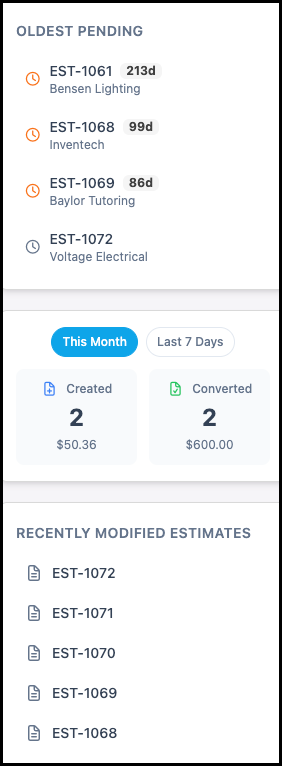
c. Insights Panel - This side panel includes information such as Oldest Pending, activity overview, and Recently Modified Estimates.
Note: See Insights Panel Example below.
d. Search Settings icon allows you to choose which columns are displayed.
e. Estimate Number - Unique ID for the Estimate (e.g., EST-1407). Numbering and prefixes can be configured in Settings / Sales / Numbering Options or in Settings / Business Settings under Record Prefixes.
f. Customer - The Contact and Company (or personal account) the Estimate is for.
g. Description - A short summary of what the Estimate contains.
h. Salesperson - The Employee assigned to the Estimate.
i. Clicking a row or the Estimate number will open an existing Estimate.
Insights Panel Example:
Estimate Information
The Estimate screen shows key information.
a. Clicking the arrow to expands Estimate Milestones.
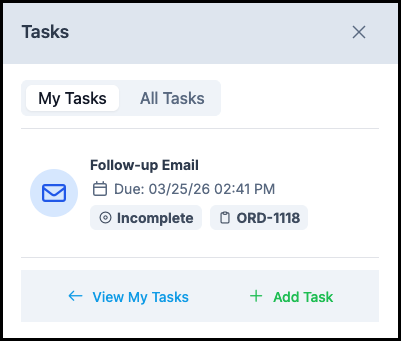
b. The Tasks button allows you to create a Task specifically associated with this Estimate.
Note: See Tasks Example below.
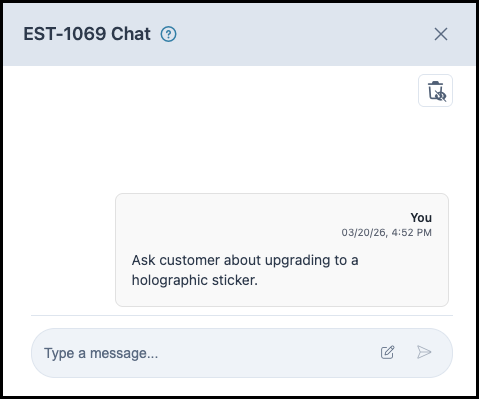
c. The Chat button allows you to log internal communication regarding this Estimate. Comments are typically saved manually and can be marked important or deleted.
Note: See Chat Example below.
d. The Export icon allows you to select from options such as Invoice, Work Order, Packing Slip, or Receipt.
e. The Email icon opens a popup with a fillable Email Template.
f. Files allow you to upload and manage Files associated with this Estimate.
g. More actions include options to Clone or Void.

Tasks Example:
Chat Example:
Estimate Details
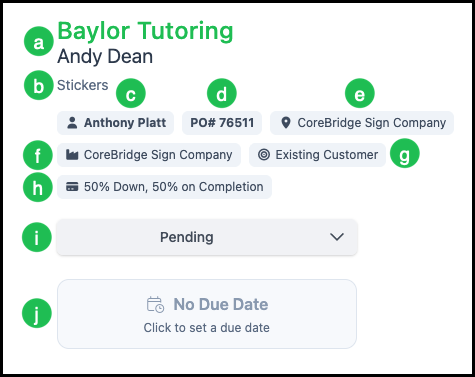
Estimate details show as a brief summary. For more information, or to edit the details, click on the Estimate Details widget or on the Edit Icon.
Note: Only information that has been entered will appear in Estimate Details.
a. Customer - Company and Contact; each may be a link that opens the Company or Contact page.
b. Description - What the Estimate contains (customer-visible).
c. Salesperson - The Employee assigned to the Estimate.
d. Customer PO# - This is a document issued by your Customer authorizing the purchase of goods or services from your business. It typically includes the items being ordered, agreed pricing, and payment terms, and serves as formal approval to proceed with the work.
e. Sales Location
f. Production Location
g. Origination - How the Customer found you.
Note: Origination options can be managed in Settings / Sales / CRM Lists.
h. Payment Terms outline the timing and conditions of payment, such as due dates, deposits, or installment schedules once the Estimate becomes an Order.
Note: These can be managed in Settings / Accounting / Payment Terms.
i. Status - an update on the progress through the workflow. This can be updated using the dropdown.
j. Order Due Date - Displays the number of days left until the Order Due Date. A due date will only appear if one has been entered.
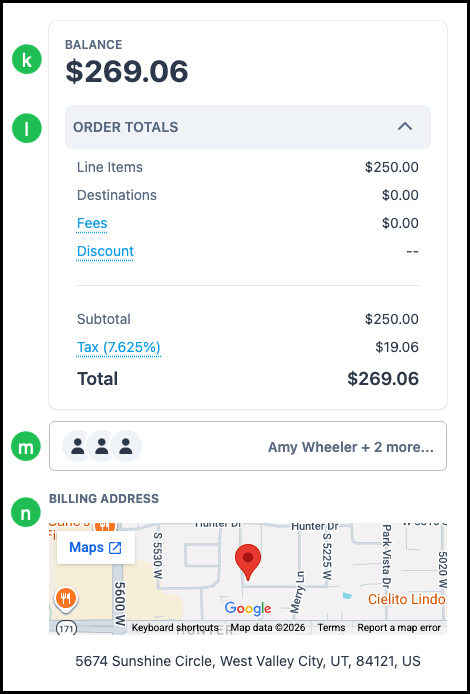
k. Balance shows the amount due.
l. Order totals - Line Items, Destinations, Fees, Discount, Subtotal, Tax, and Total. Click Fees, Discount, or Tax to edit when the Estimate is editable.
m. Roles - Employees assigned to Roles for this Estimate (e.g., Salesperson).
n. Billing address - The billing address for the Estimate.
Note: Use Edit icon at the top to change Customer, description, or other Estimate-level details when the Estimate is not locked (e.g., before it is Approved and moved to an Order).
Line Items Tab
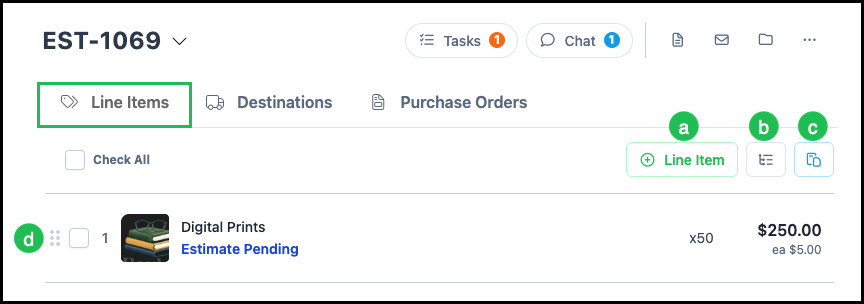
The Line Items tab lists the products and services on the estimate. Each line item can be an assembly, labor, material, quick product, or other component configured in your system.
a. Add Line Item adds a product or service. Choose the type of item (e.g., Assembly, Labor, Material, Quick Product), select the specific item, and add it to the Estimate.
b. The Bill of Materials icon allows you to view or export the Bill of Materials.
c. The Clipboard icon allows you to paste line items from the Clipboard if you have copied items from another Estimate.
d. The Line Items list shows each item on the Estimate. You can edit, reorder, or remove line items when the Estimate is editable.
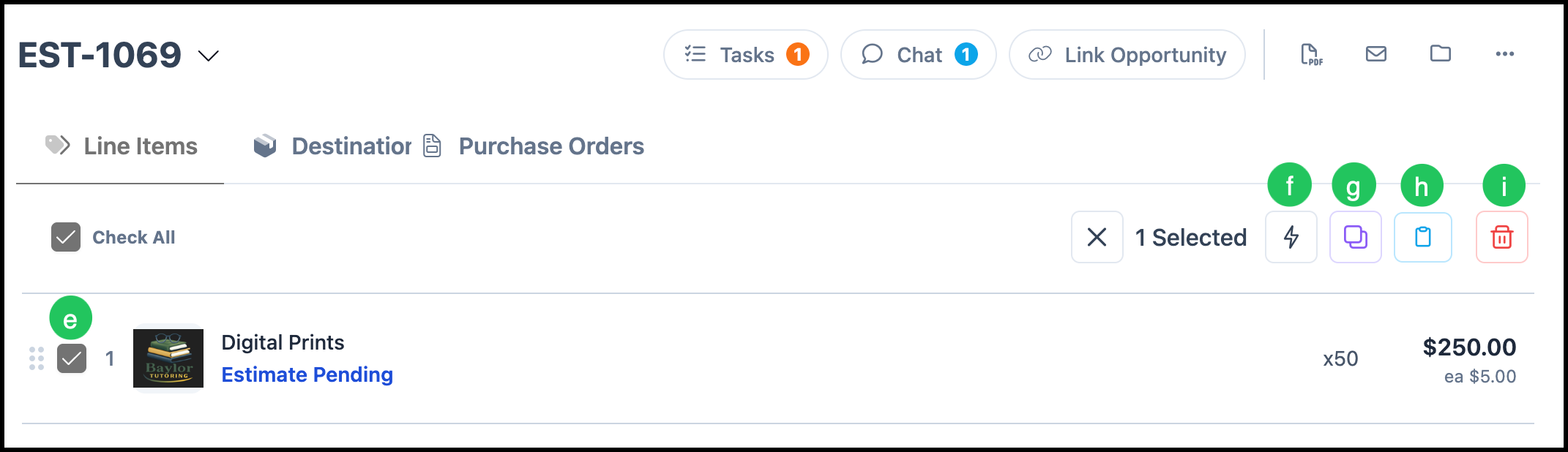
e. Checking one or more Line Items brings up further options.
f. Create Group Quick Product - Add this Line Item to Quick Products for future use.
g. Clone - Duplicate the Line Item on this Estimate.
h. Clipboard - Copy this Line Item to the Clipboard to use on other Orders or Estimates.
i. Delete Line Item.
Destinations Tab
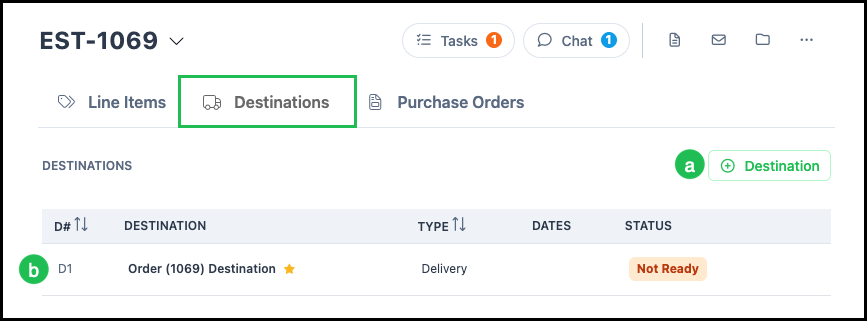
The Destinations tab shows how the product will be delivered or transported to the Customer (e.g., pickup, ship). Destinations represent delivery or workflow stages. Destination status on an Estimate typically cannot be progressed until the Estimate is converted to an Order.
Note: Destinations can be managed in Settings / Workflow / Destination Options.
a. Add Destination begins the process of adding a Destination to this Estimate.
b. The Destination list shows information such as the Destination, Type, Dates, and Status on each Destination.
Note: Clicking on the Destination allows you to edit information or update the Destination Status.
Purchase Orders Tab
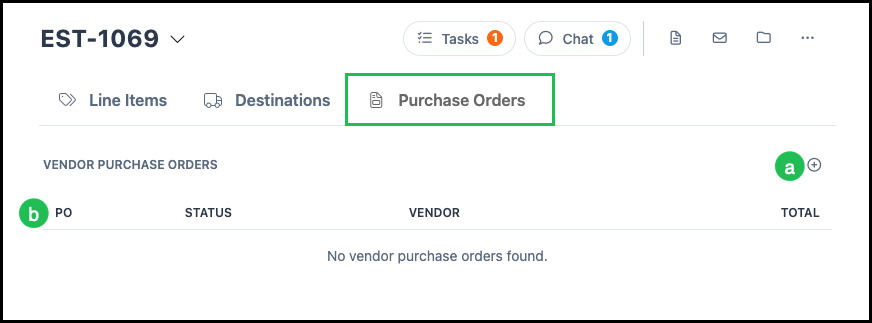
The Purchase Orders tab shows vendor purchase orders linked to this Estimate. These are orders for goods or services that need to be purchased from a vendor to fulfill the Estimate once it becomes an Order.
a. Use the add button (e.g., plus icon) in this tab to create a new vendor purchase order for this Estimate when the option is available.
b. The list displays columns such as PO (purchase order number), Status, Vendor, and Total. If there are no vendor purchase orders yet, the list will indicate that.