
Labors are the time-based work items used when building a Product or delivering a service. Labors can include design time, production time, install time, or revision time. Along with Materials and Machines, Labors help CoreBridge EVO calculate cost, pricing, and production needs.
Cloning a Labor creates a new Labor that starts with the same setup as an existing one. When you need a similar Labor, cloning is usually faster and more accurate than creating a Labor from scratch, because costing, billing rates, categories, and other details are already in place. You then update only what should be different.
Table of Contents
- Important Information
- When to Clone a Labor
- Cloning a Labor
- Updating the Cloned Labor
- Frequently Asked Questions
- Related Articles
Important Information
A cloned Labor is a separate Labor. Changes you make to the clone do not change the original Labor.
When you clone a Labor, CoreBridge EVO copies the Labor details from the original, including category assignments, custom field values, and files associated with the Labor. The new Labor name uses the original name with (Clone) added. If that name already exists, the system uses (Clone) (2), and so on.
For background on Labor fields and tabs, see Labors Overview. For creating a Labor from scratch when nothing similar exists, see Adding Labors.
Note: When creating a Labor that is similar to an existing one, cloning is often the best starting point. Start from scratch only when the new Labor does not closely match any Labor you already have.
When to Clone a Labor
Clone a Labor when you need another Labor that should keep most of the same setup. Common situations include:
- A new Labor type that uses the same units, costing, and billing rules as an existing Labor, with only the name or rate changing.
- A customer-specific or location-specific version of a Labor you already use.
- A close match to a standard Labor where you want to adjust hourly cost, hourly price, categories, document naming, or lead time without rebuilding every field.
Cloning a Labor
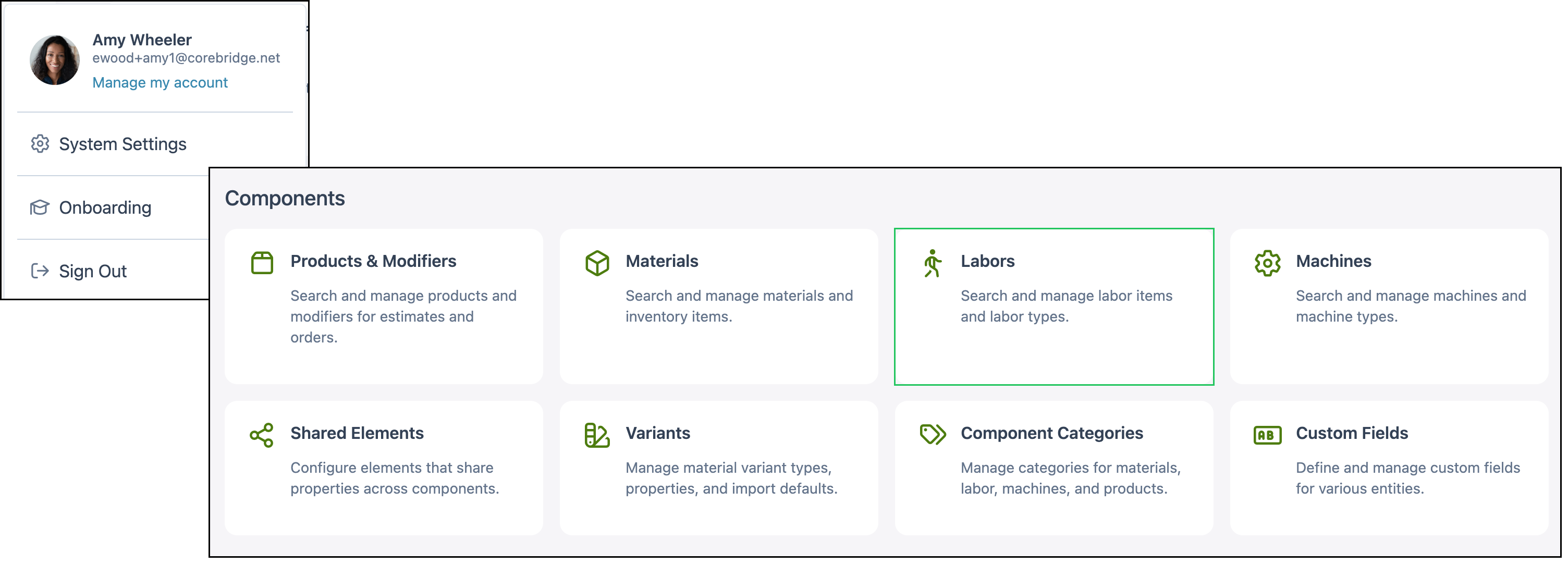
Navigate to System Settings / Components / Labors.
1. Locate the Labor you want to clone on the Labors list. Use Search or column filters if the list is long.
2. Click the More Actions menu for that Labor.
3. Select Clone.
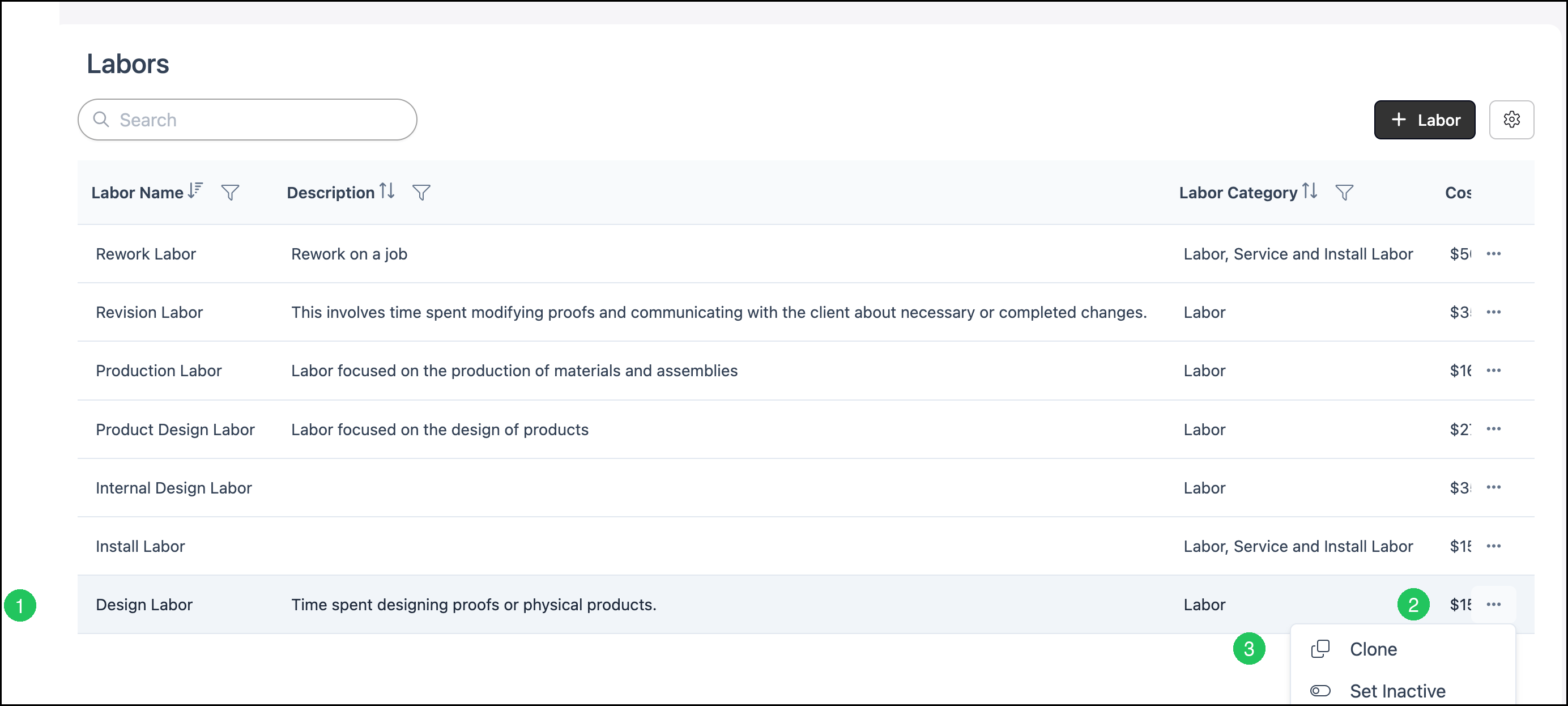
The cloned Labor appears in the Labors list with (Clone) in the name. You remain on the Labors list after cloning.
Note: You can also clone a Labor from the Labor detail screen. Open the Labor, click More Actions, and select Clone.
Updating the Cloned Labor
After cloning, open the new Labor and update anything that should differ from the original. At minimum, change the Name so the clone is easy to find later. Review related fields and tabs so costing, billing, documents, and order entry stay accurate.
4. Click the cloned Labor to open it.
5. Update the Name and any other fields that should differ from the original Labor.
6. Click Save.
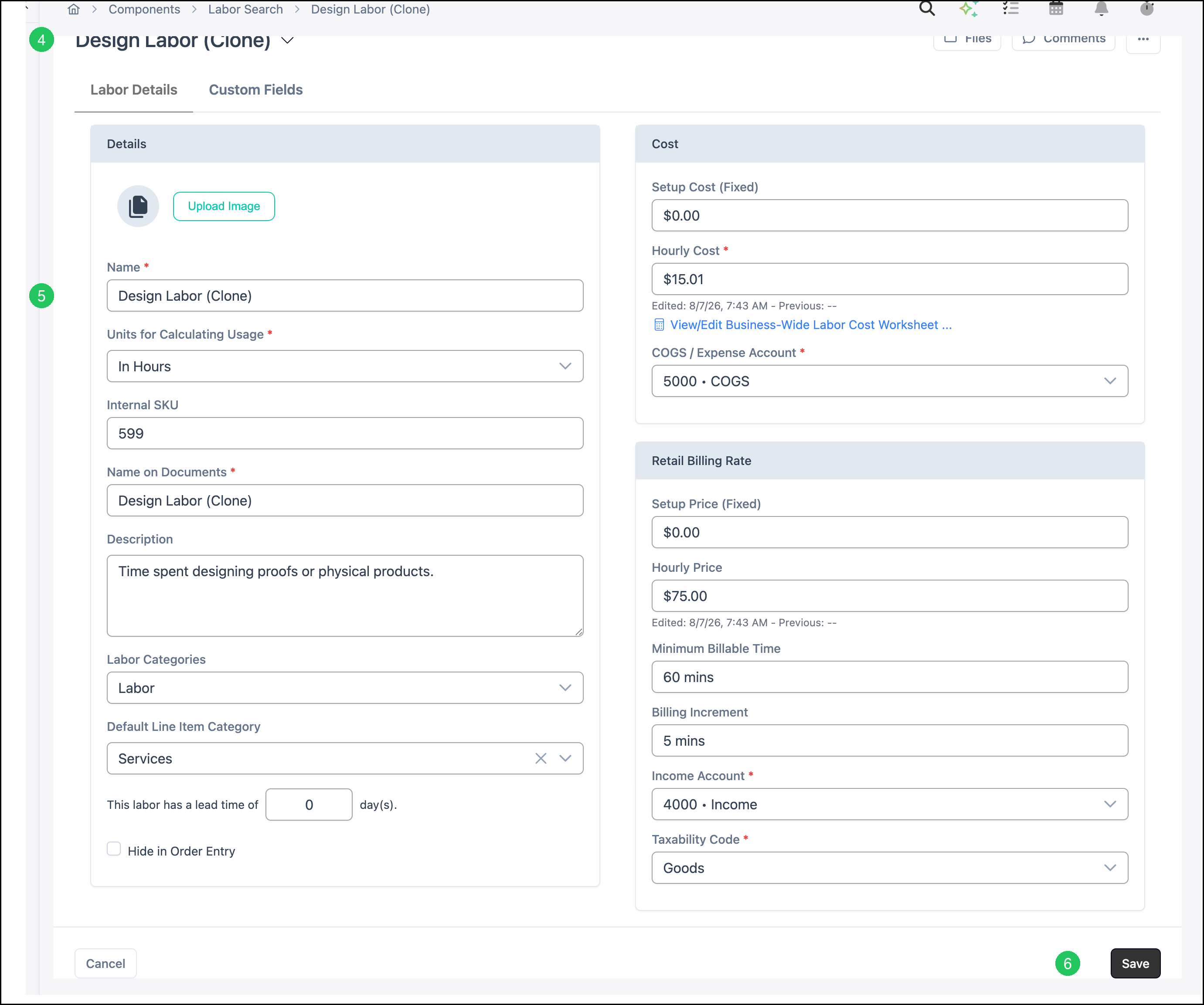
When updating the clone, check these areas as needed:
- Details — Name (how the Labor appears in your list), Name on Documents (customer-facing Estimates and Invoices), Internal SKU, Description, Units for Calculating Usage, Labor Categories, Default Line Item Category, lead time, Hide in Order Entry, and the Labor image.
- Cost — Setup Cost (Fixed), Hourly Cost, and COGS / Expense Account. Use the Labor Cost Worksheet when you need to review or update business-wide labor costing.
- Retail Billing Rate — Setup Price (Fixed), Hourly Price, Minimum Billable Time, Billing Increment, Income Account, and Taxability Code.
- Custom Fields and Files — confirm custom values and attached files still apply to the clone.
Note: Required fields marked with a red asterisk must be completed before you can save. See Adding Labors for field-by-field guidance.
Frequently Asked Questions
1. Why should I clone instead of creating a Labor from scratch?
Answer: Cloning keeps costing, billing rates, categories, and other setup from a Labor that already works. You only change what needs to be different, which reduces setup time and mistakes. Use Adding Labors when nothing similar exists.
2. What is copied when I clone a Labor?
Answer: The clone starts with the same Labor details as the original, including category assignments, custom field values, and associated files. The original Labor is not changed.
3. How is the cloned Labor named?
Answer: The new Labor uses the original name with (Clone) added. If that name already exists, CoreBridge EVO uses (Clone) (2), and continues numbering as needed. Update the Name (and usually Name on Documents) after cloning so the Labor is clear in lists and on customer documents.
4. Does cloning change the original Labor?
Answer: No. The clone is a separate Labor. Edits you make after cloning apply only to the clone.
5. Can I clone from the Labor detail screen?
Answer: Yes. Open the Labor, click More Actions, and select Clone. The new Labor still appears on the Labors list with (Clone) in the name.
6. Should I update cost and retail rates after cloning?
Answer: Review Cost and Retail Billing Rate whenever the new Labor should bill or cost differently from the original. Leave rates alone only when the clone should keep the same numbers. See Labor Cost Worksheet for business-wide labor cost updates.