
Creating Orders in CoreBridge is essential for mastering the software's functionality and optimizing workflow. Becoming familiar with the process can help you efficiently generate Orders for current customers. This article walks through creating an Order, converting an Estimate into an Order, and using Statuses to keep Orders organized.
Table of Contents
- Creating the Order
- Using Quick Add Company
- Converting an Estimate to an Order
- Viewing the Order
- Editing the Order
- Using Statuses
- Managing Order Finances
- Additional Line Items
- Adding Proofs
- Proof Approval
- Destinations
- Purchase Orders
- Frequently Asked Questions
- Related Articles
Creating the Order
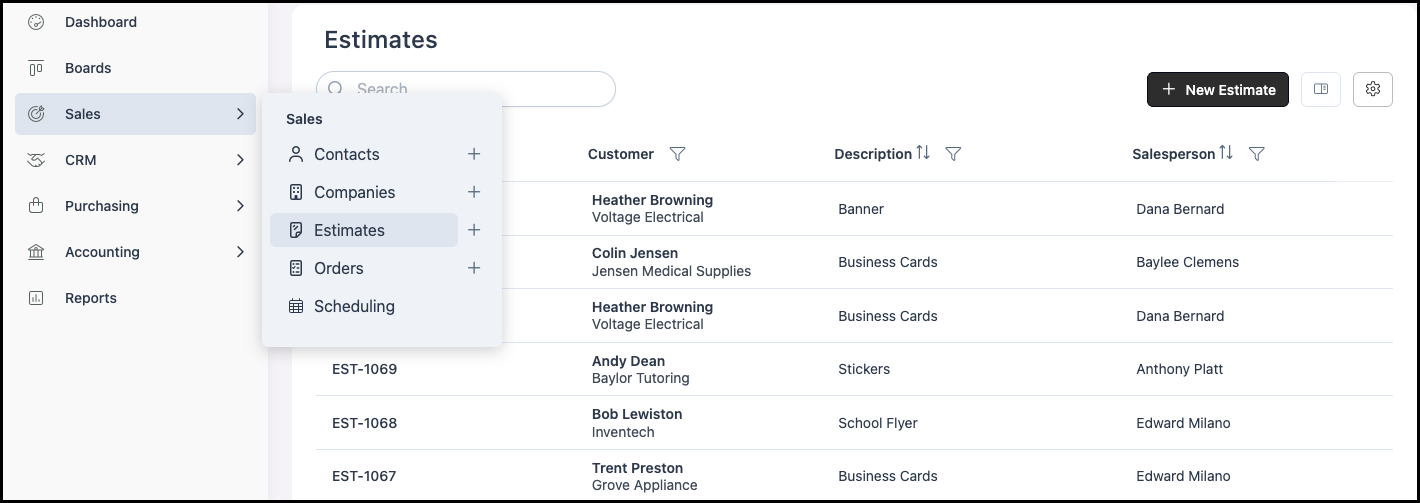
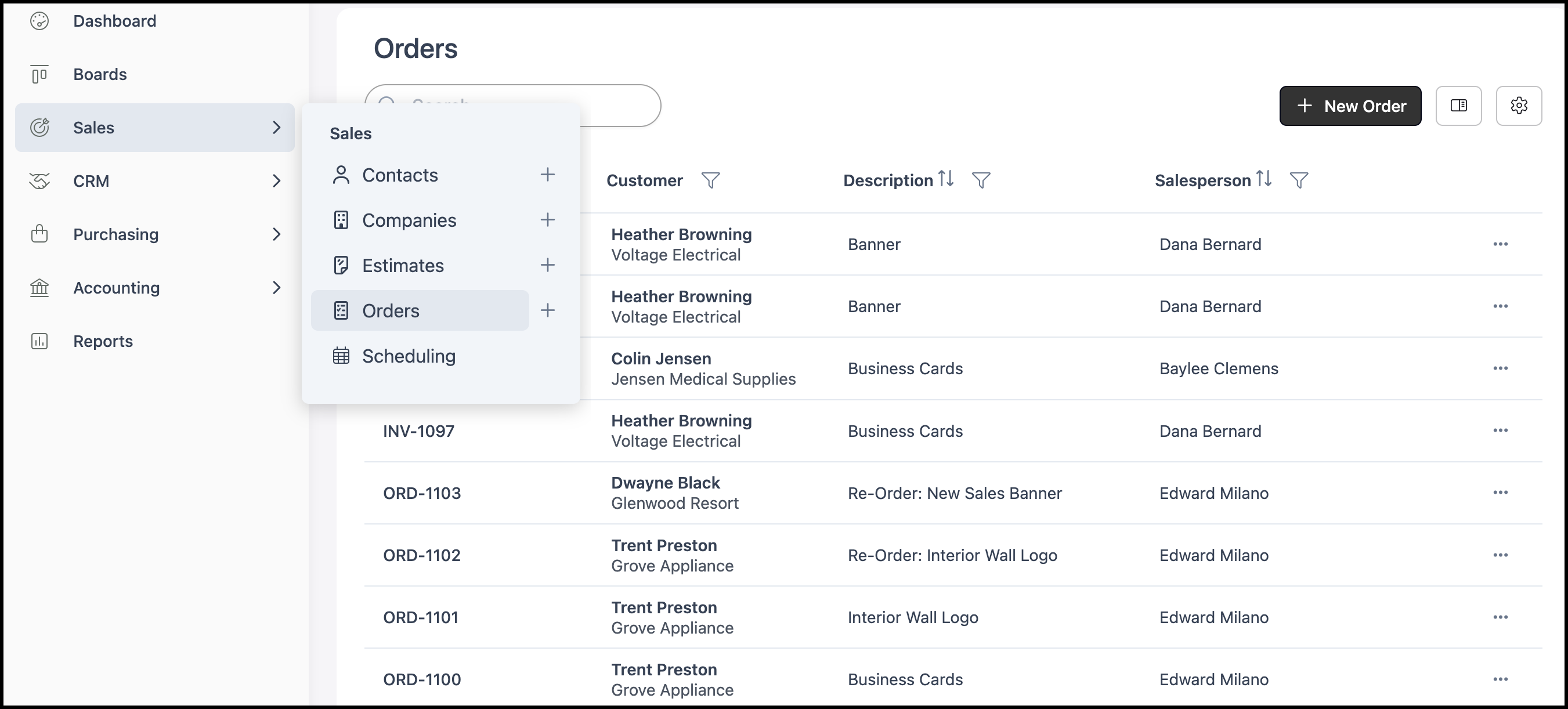
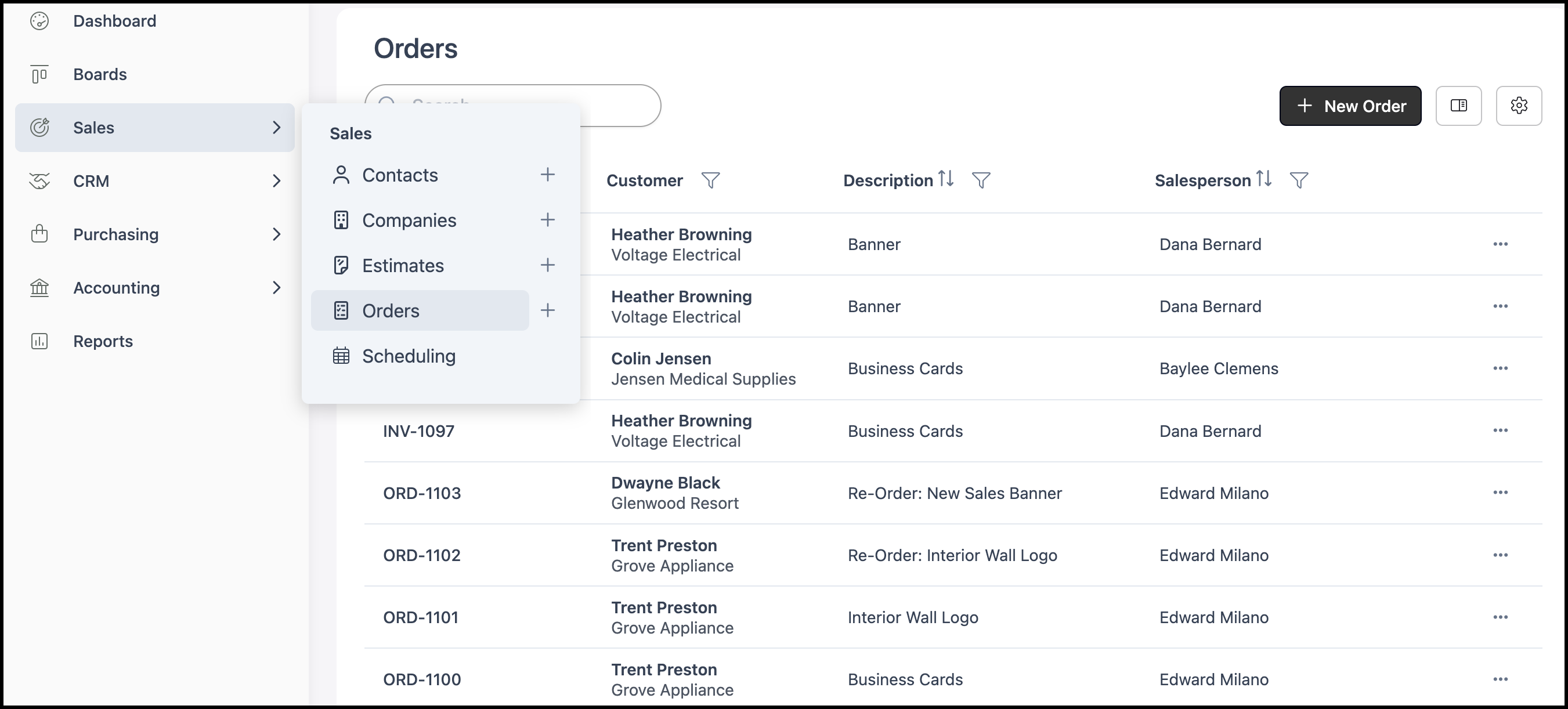
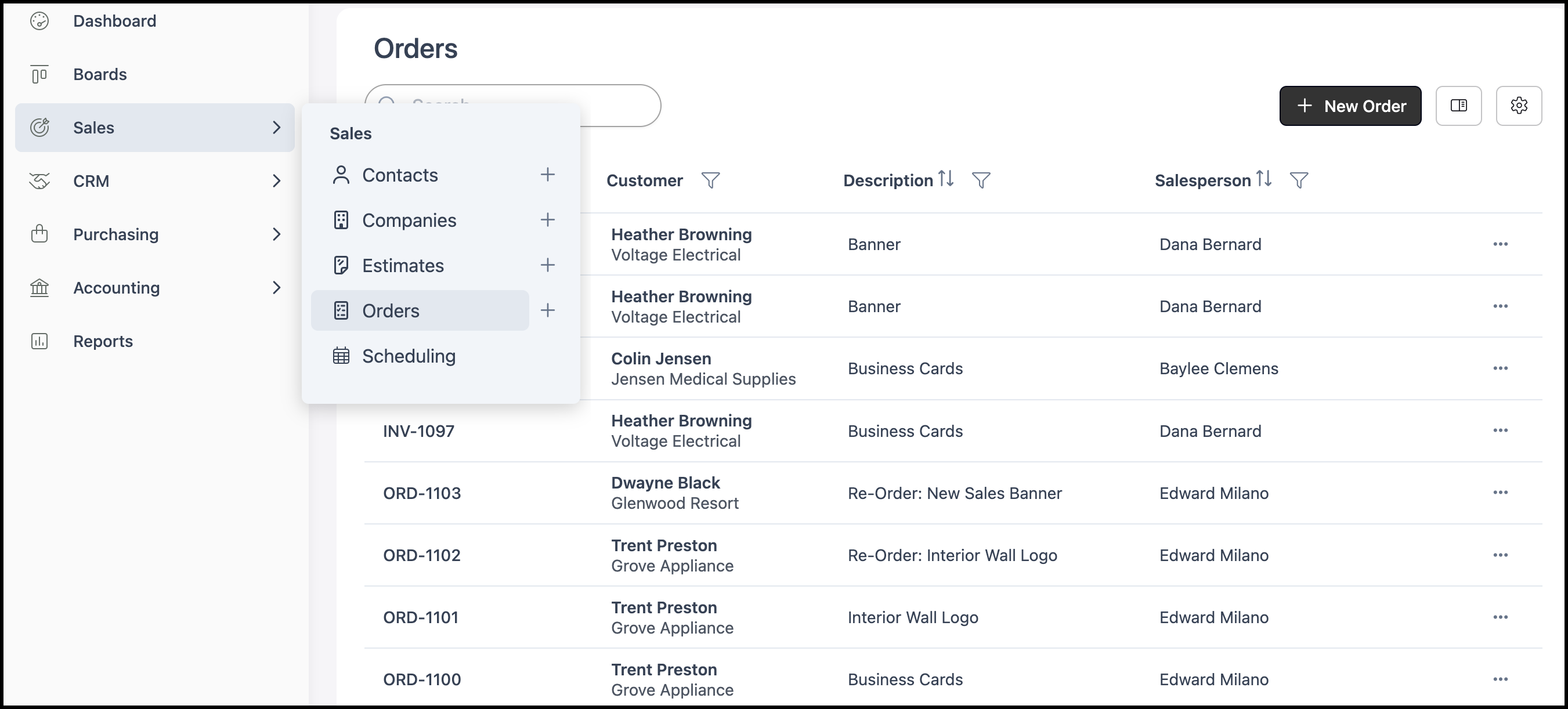
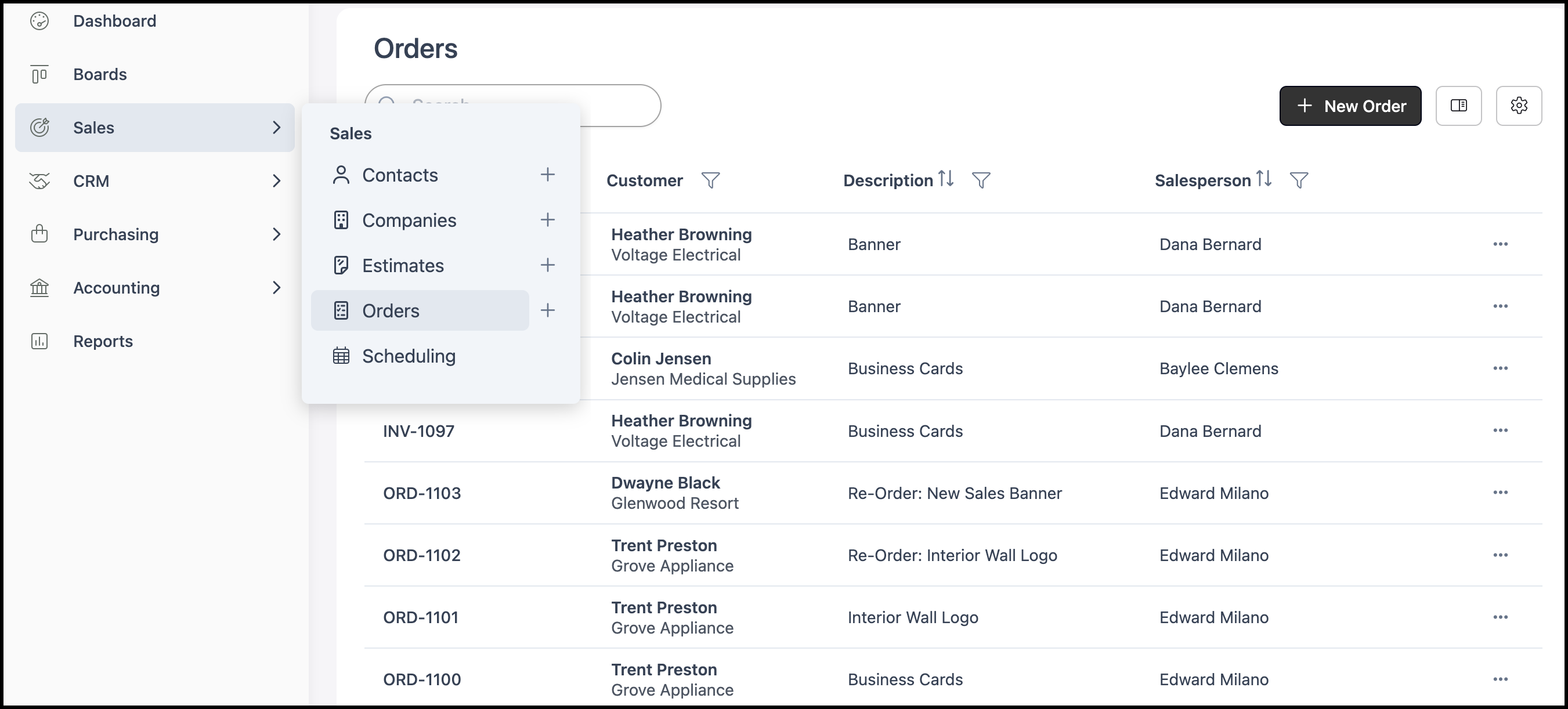
Navigate to Sales / Orders.
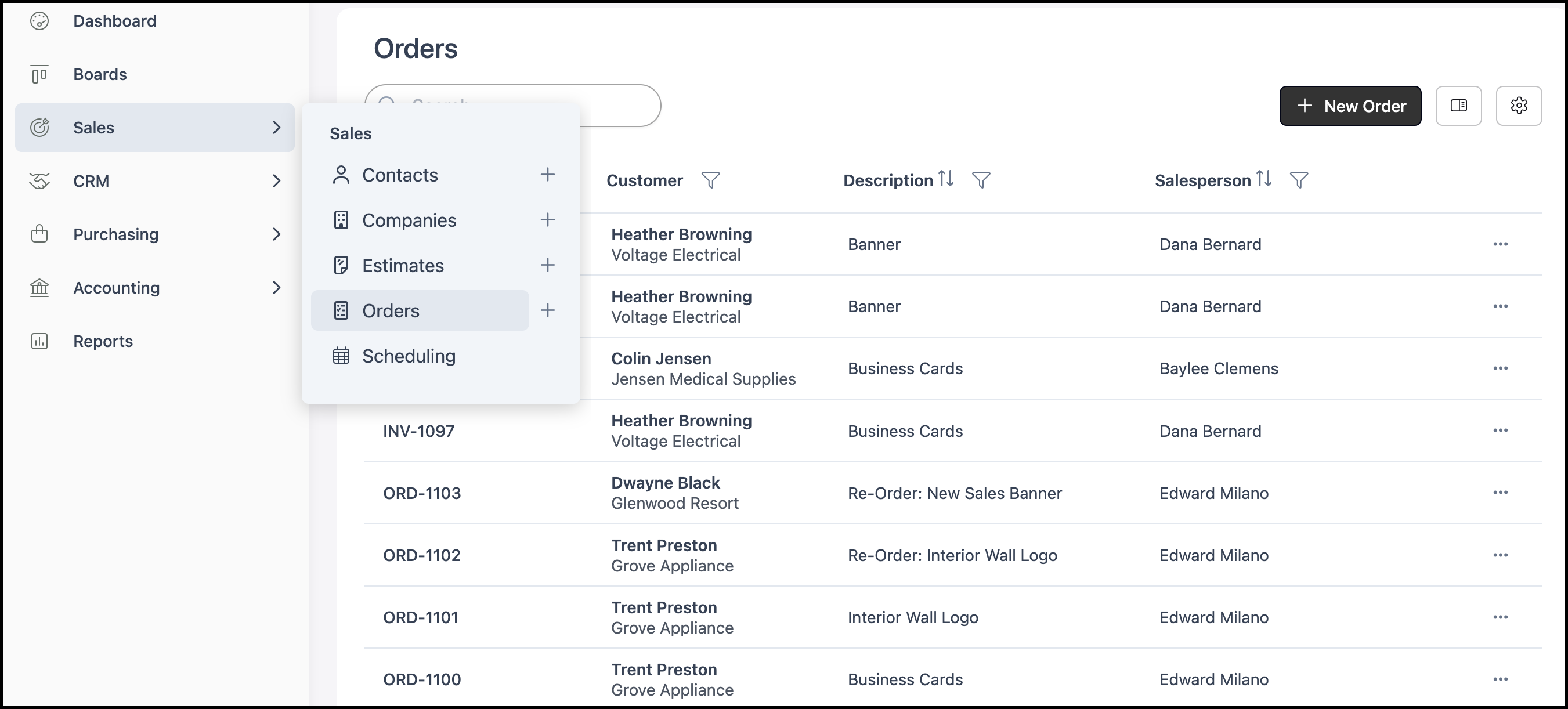
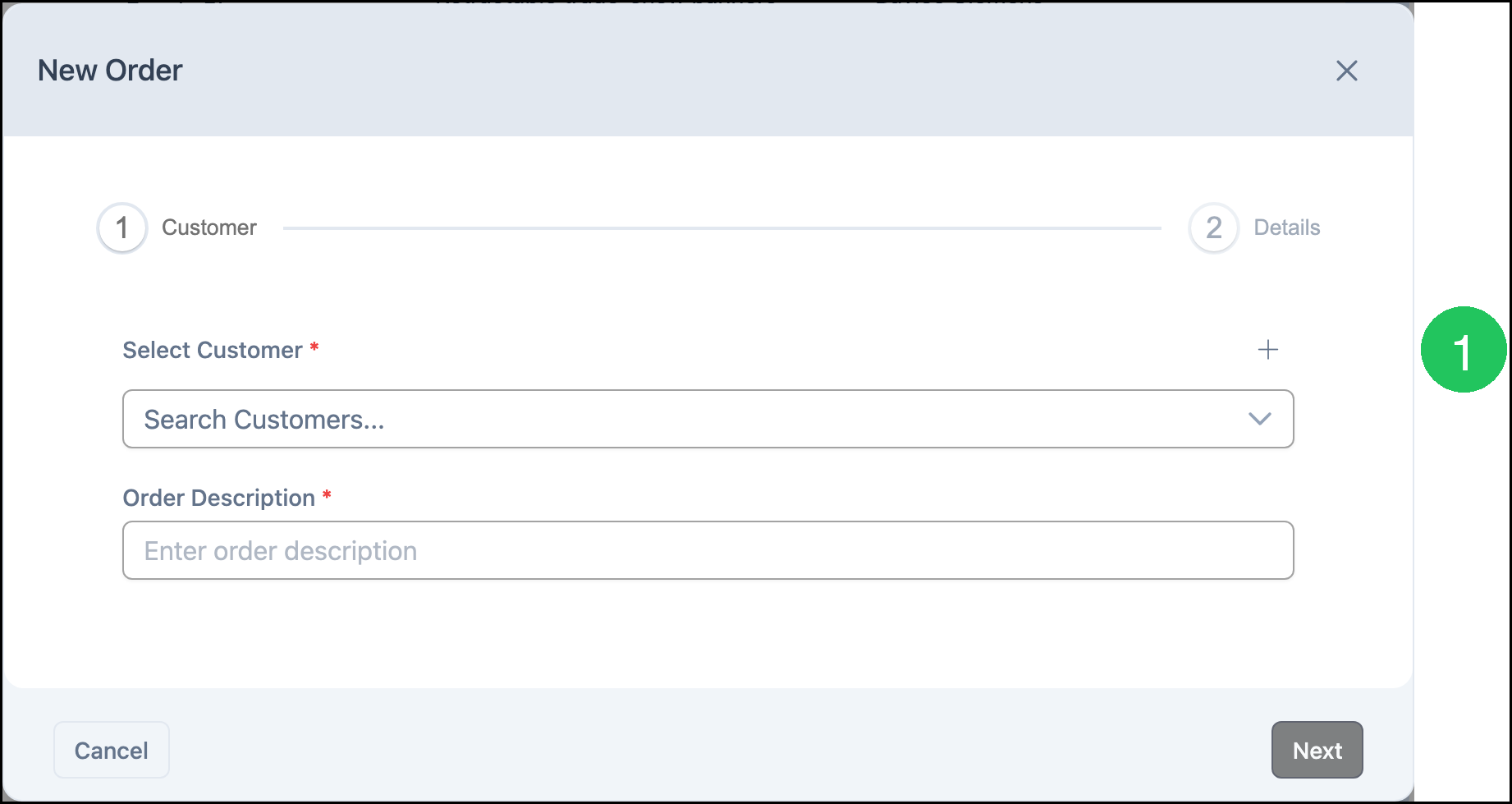
1. Click the New Order button.
2. Select the Customer. Search or browse to choose an existing Company and Contact. Results show as Company | Contact. After you select a Customer, the list is limited to contacts for that Company. Clear the field to search all customers again.
Note: The Customer is required to save the Order.
3. Enter the Order Description. This is a summary of what the Order contains, is Customer-visible, and searchable.
4. Click Next.
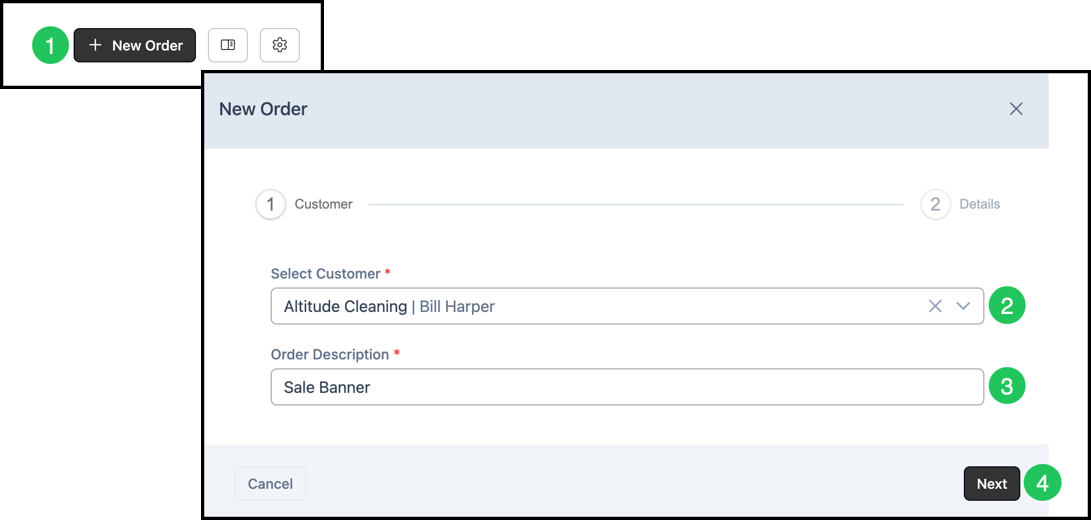
5. Enter Customer PO, if applicable.
Note: This is a document issued by your Customer authorizing the purchase of goods or services from your business.
6. Enter the Order Origination, if desired.
Note: This is how the Customer found you.
7. Select Salesperson.
8. Click Create Order.
Note: Required fields can be managed in Settings / Sales Settings / Estimate and Order Options / Orders.
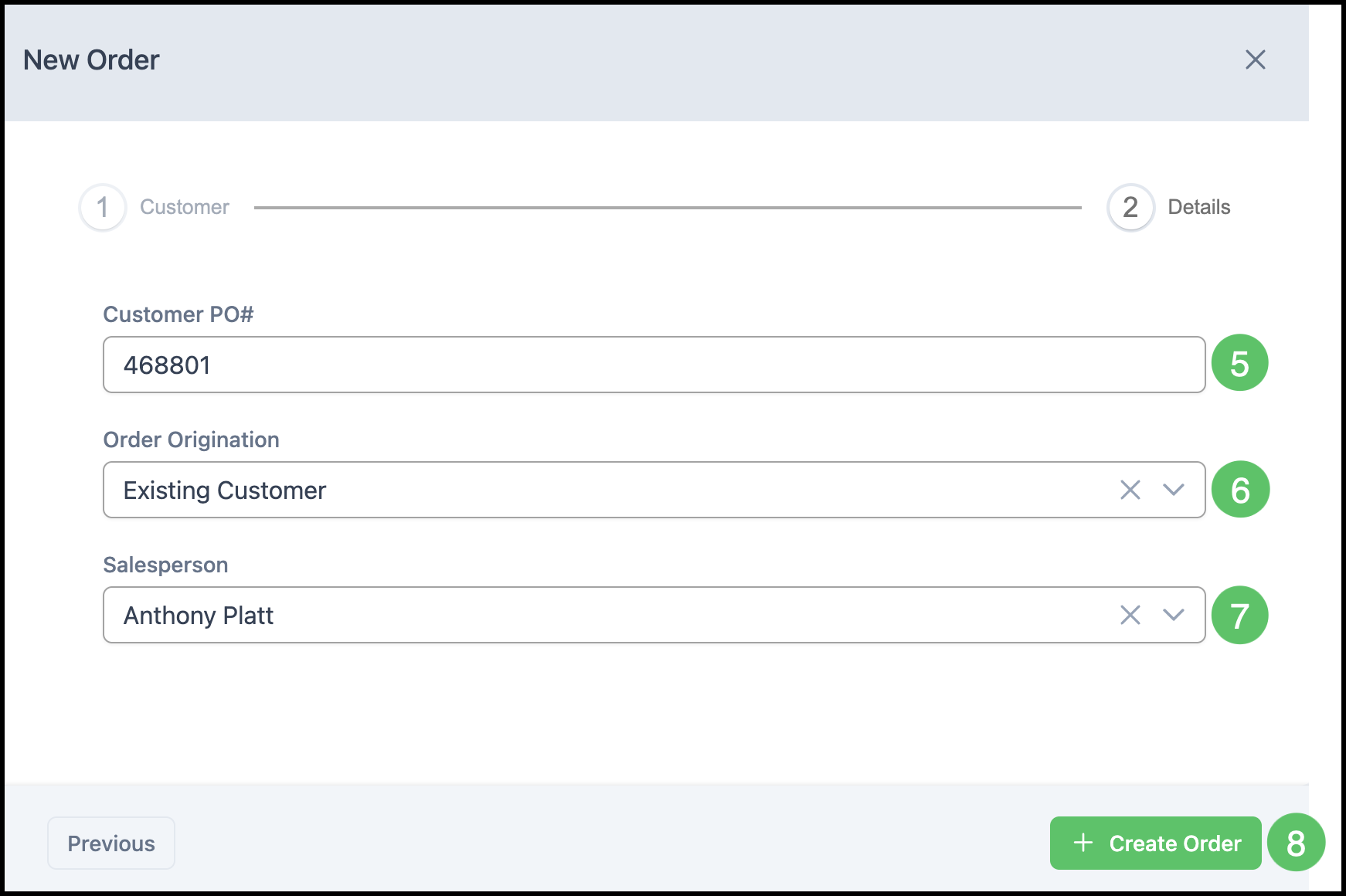
9. Enter Line Item Name.
10. Enter Line Item Category, if applicable.
Note: The options to include and/or require a Line Item Category at this stage can be managed in Settings / Sales Settings / Estimate and Order Options / Orders.
11. Select the appropriate Components tab.
12. Select the specific Component.
13. Click Next.
14. Enter the Component Details.
Note: These fields will vary depending on the selected Component.
15. Click Save Changes.
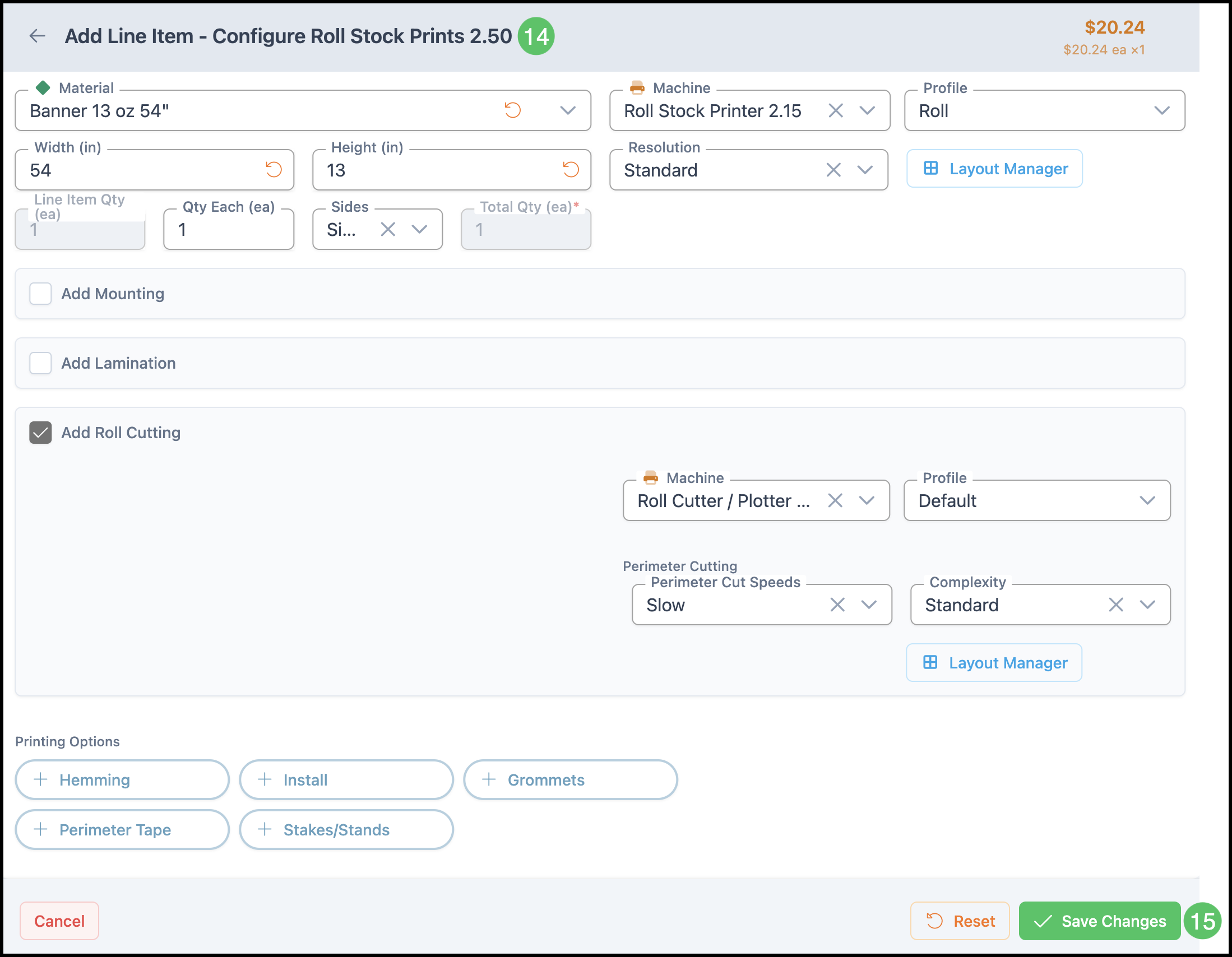
Note: This saves and opens the Order as created to this point. Further Line Items can be added and adjustments can be made at this point or at any time by accessing the Order in Sales / Orders.
Using Quick Add Company
Use Quick Add Company from the New Order dialog when the Company is not already in CoreBridge.
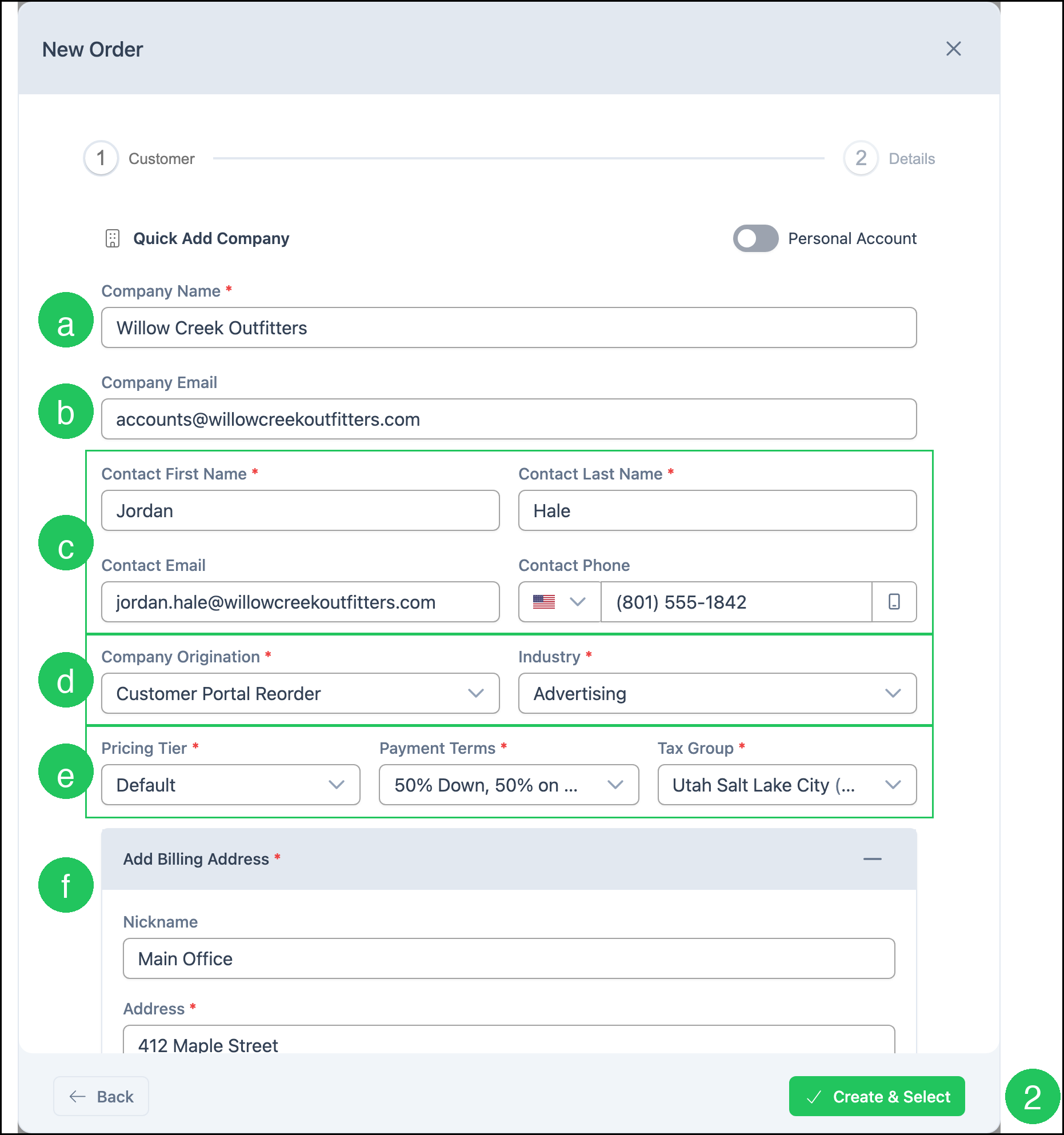
1. Click the + next to Select Customer.
a. Company Name - The name of the Company.
b. Company Email - The email address for the Company.
c. Contact First Name, Contact Last Name, Contact Email, and Contact Phone - The primary contact for the Company.
d. Company Origination and Industry - How the Company found you, and the industry the Company is affiliated with.
e. Pricing Tier, Payment Terms, and Tax Group - Defaults used on Estimates and Orders for this Company.
f. Add Billing Address - Expand this section to enter the billing address when it is required.
Note: Turn on Personal Account when the customer is an individual rather than a Company.
Note: Which fields are required follows your Company Options in Settings.
2. Click Create & Select.
Converting an Estimate to an Order
When a Customer has approved an Estimate, you can create an Order by converting that Estimate. The new Order will carry over the Customer, description, Line Items, and other Estimate details so you do not have to re-enter them.
Navigate to Sales / Estimates and open the appropriate Estimate.
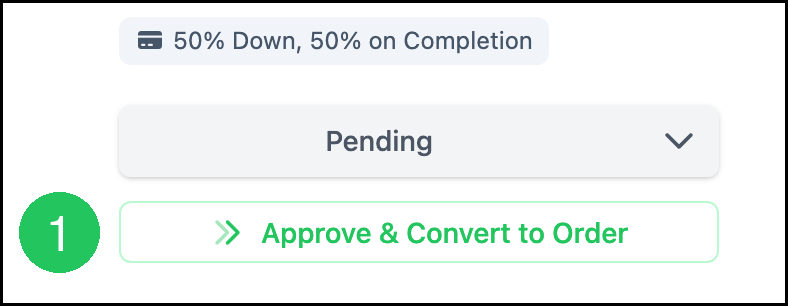
1. Click Approve & Convert to Order.
Note: Setting Status to Approved does not convert the Estimate to an Order. Click Approve & Convert to Order to create the Order.
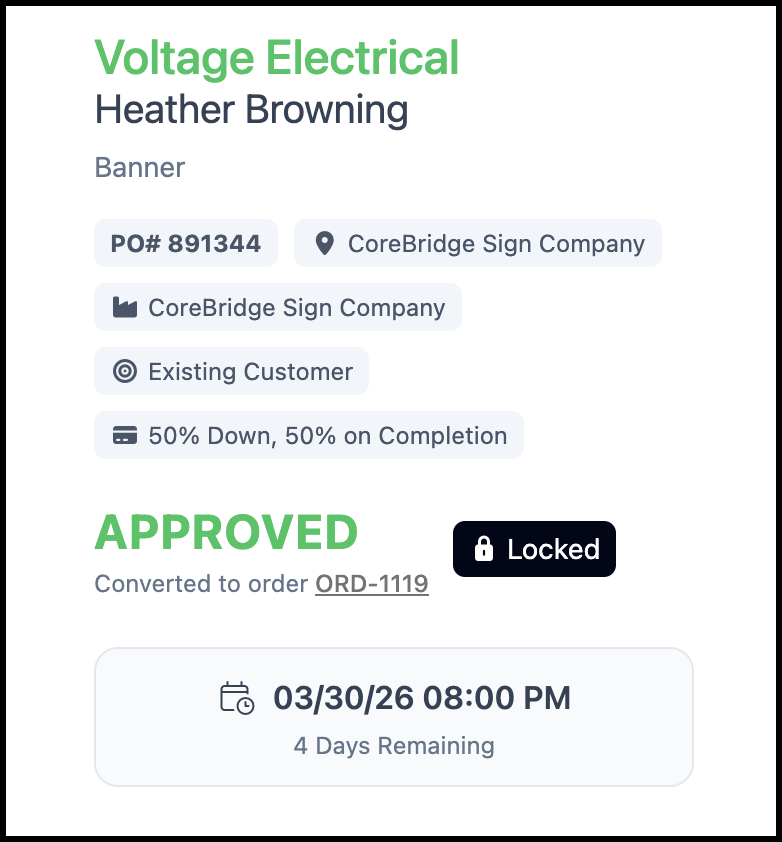
Note: Once converted to an Order, the Estimate is locked and further adjustments must be made on the Order. See example below.
Example:
Viewing the Order
Once the Order is created, you can open it to review details, add additional Line Items, make updates, generate a PDF, email the Customer, or clone the Order for reuse. For more information, please see Orders Overview.
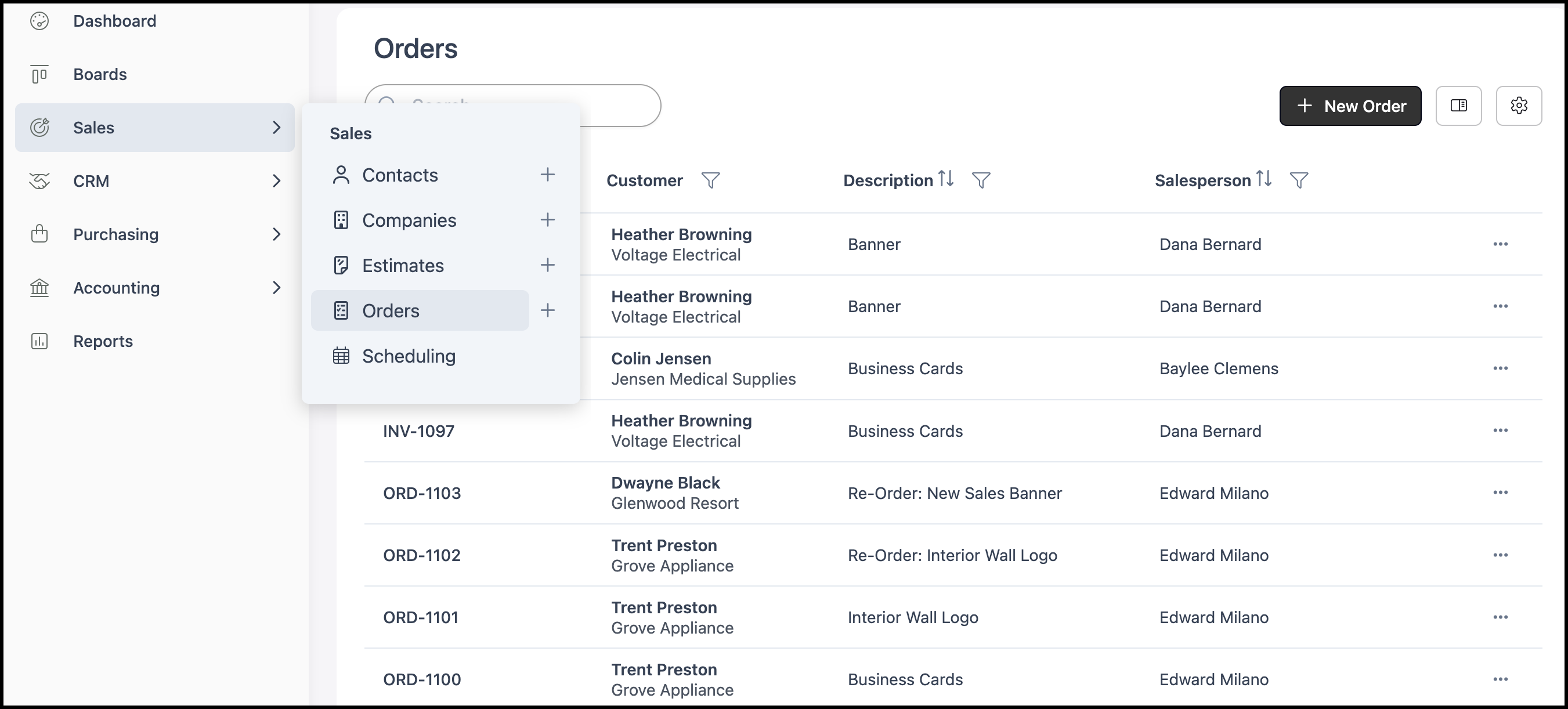
Navigate to Sales / Orders and select the appropriate Order.
a. The Documents menu allows you to select from options such as Invoice, Work Order, Packing Slip, or Receipt.
Note: These options can be managed in Settings / System / Documents.
b. The Email icon opens a dialog with a fillable Email Template.
c. The Files icon allows you to upload and organize pertinent documents. For more information, please see Managing Files.
d. The More Actions menu includes options such as Create Credit Memo, Clone, Customer Portal Link, Link Opportunity, and History.
e. Line Items can be added with the Line Item button or from the Clipboard icon.

Editing the Order
Orders can be edited at any time after they are created. You can adjust Company and Sales information, update due dates, and manage the Roles associated with the Order. For more information, please see Employee Roles and Permissions in Settings.
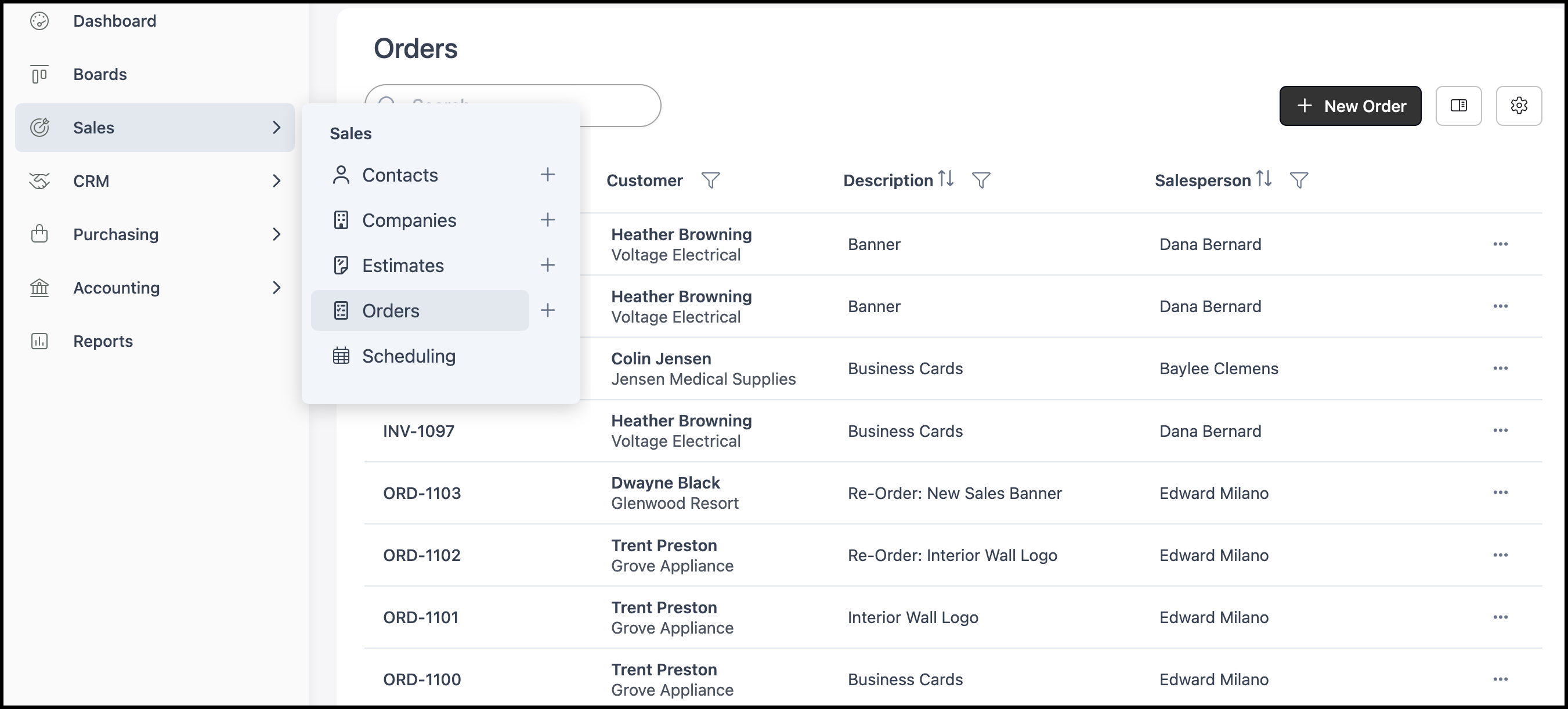
Navigate to Sales / Orders and select the appropriate Order.
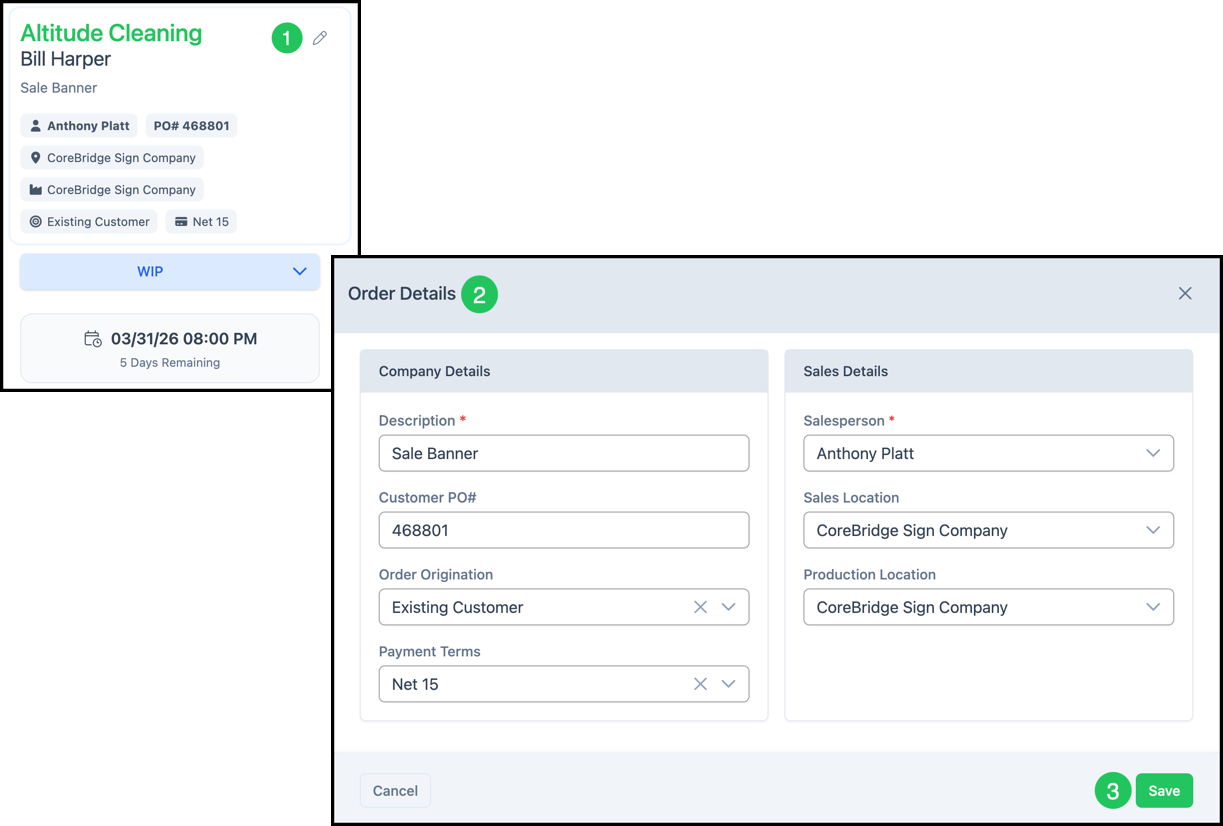
Updating Order Details:
1. Click on the Edit icon or on the side panel near the Company Information.
Note: The Edit icon is visible when hovering over this area.
2. Update any Order Details.
3. Click Save.
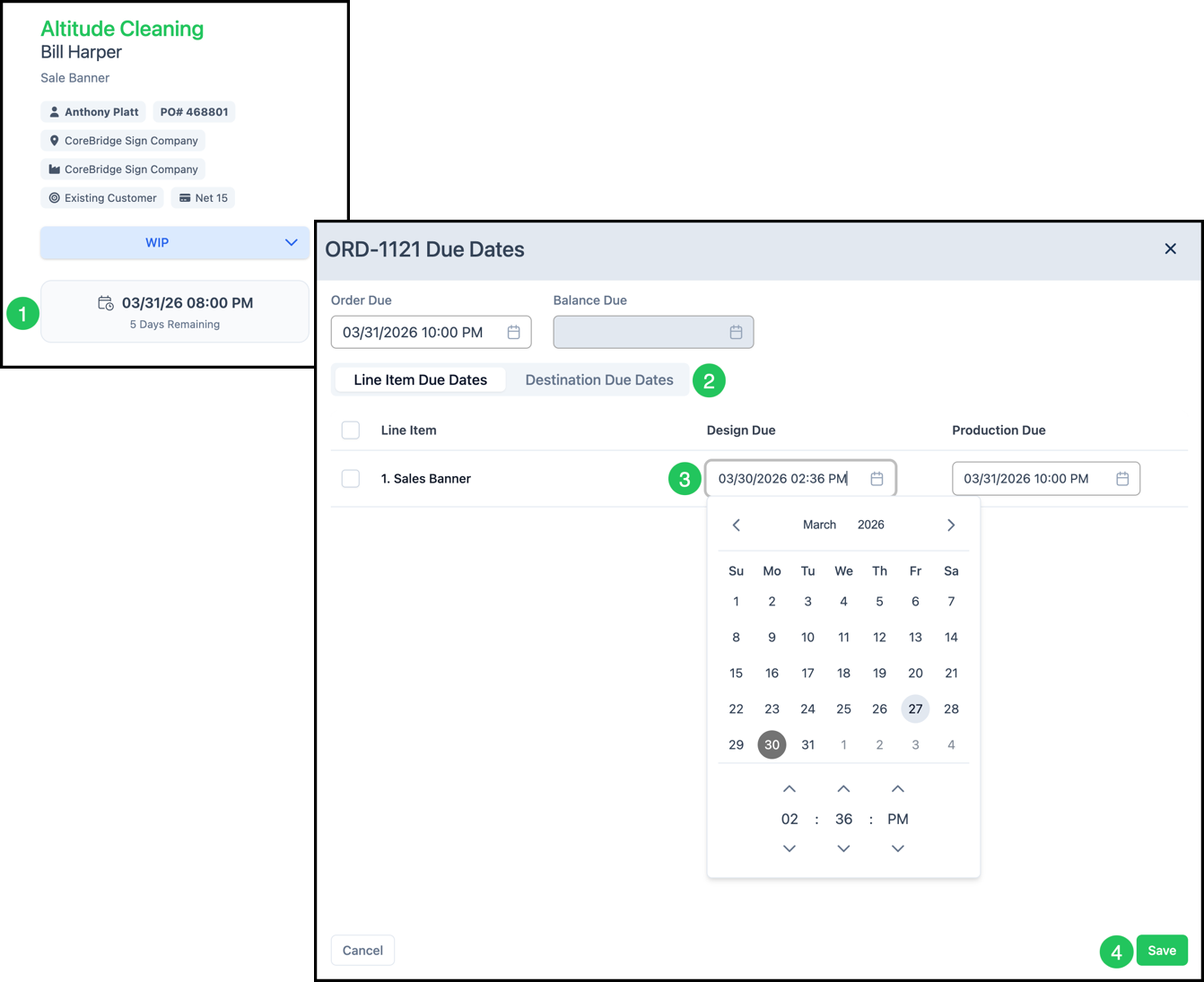
Updating Due Dates:
1. Click on the Date icon.
2. Select Line Item or Destination Due Dates.
3. Update any of the dates using the calendar drop downs.
4. Click Save.
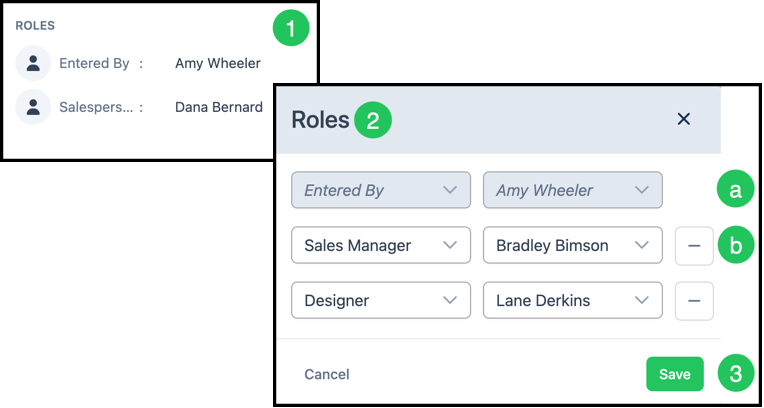
Managing Roles:
1. Click on Roles area of the side panel.
2. Update the Roles associated with this Order.
a. The Entered By field is automatically populated to reflect who created the record.
b. The dropdown menus allow you to change your selections. The subtraction signs remove the row.
3. Click Save.
Using Statuses
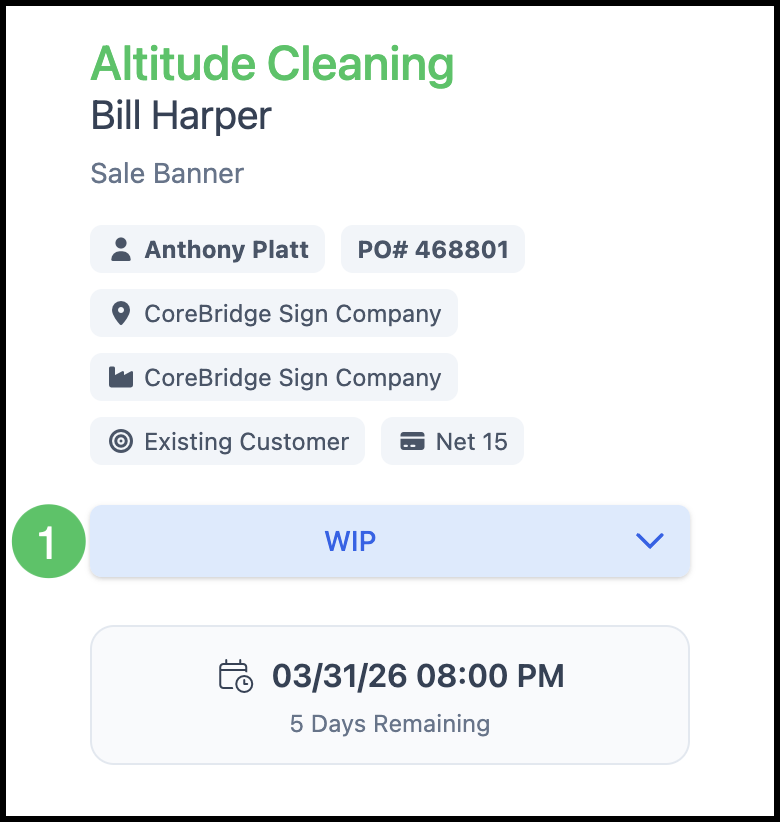
Statuses help keep Orders organized and show where they are in your workflow. You can set or change the Status using the Status dropdown on the Order page. Set the correct status as the Order moves through your workflow so your team can track progress and prioritize work.
Note: Status options may be managed in Settings / Workflow / Workflow Statuses.
Navigate to Sales / Orders and select the appropriate Order.
1. Use the dropdown to update the Status. For more information, please see Line Item Statuses.
Order statuses typically include:
a. Pre-WIP (Pre-Work in Progress) - Used when the Order is not yet ready to be worked on.
b. WIP (Work in Progress) - The Order is currently being worked on. Substatuses may be available to show where it is in the process.
c. Built - The Order has been created/completed.
d. Invoicing - The Order is complete and ready for the Customer, or is being re-opened for changes.
e. Invoiced - The Order is locked once set to Invoiced.
Note: To make changes use the full Unlock feature.
Managing Order Finances
Use this section to manage the financial details of the Order by adding fees, applying discounts, and updating tax settings. You can also record payments and view payment history to keep the Order total and balance up to date. For more information, please see Tax Groups.
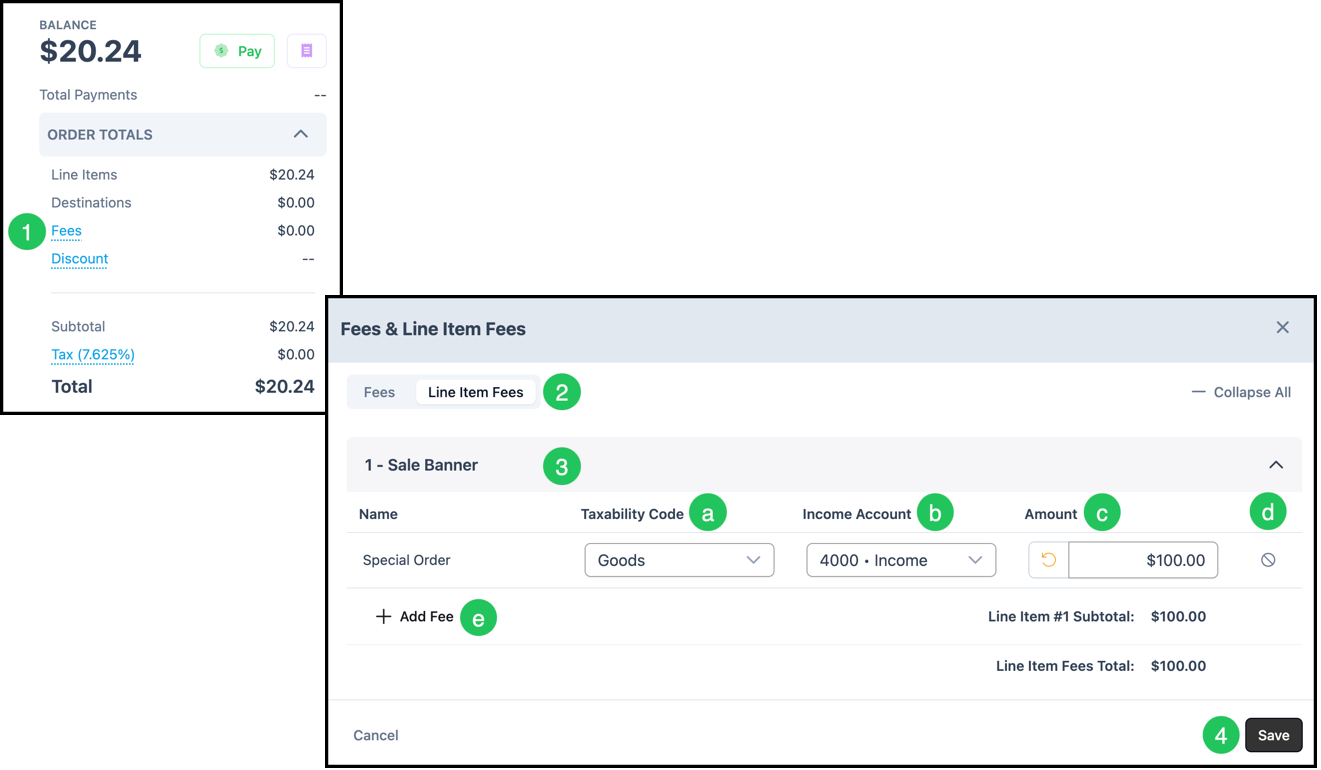
Adding Fees:
1. Click the Fees link.
2. Select either Fees or Line Item Fees.
Note: Fees are associated to the full Order.
3. Select the Line Item, if applicable.
a. Taxability Code associated with the Fee.
b. Income Account associated with the Fee.
c. The amount field can be adjusted.
d. Clicking this icon will remove the Fee.
e. Click here to add a Fee.
Note: Order and Line Item Fees can be managed in Settings / Sales Settings / Order & Line Item Fees.
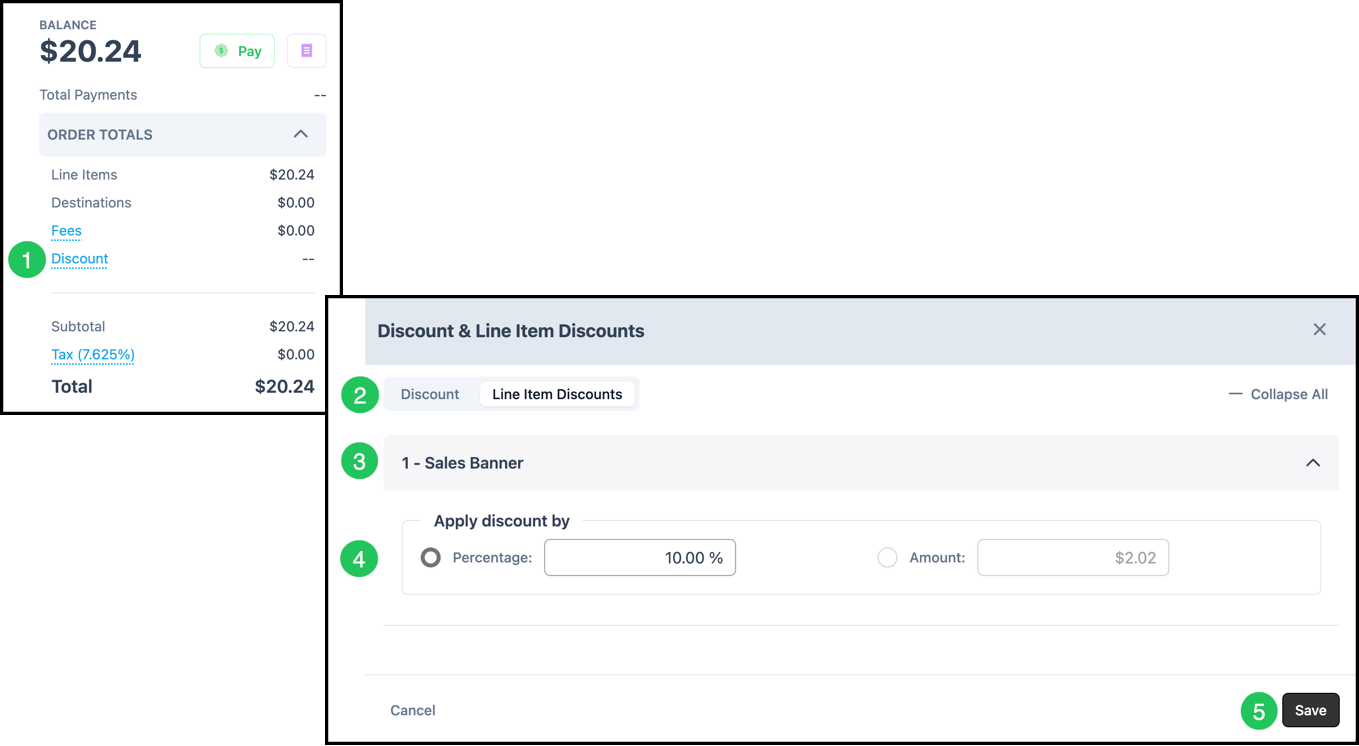
Adding a Discount:
1. Click the Discount link.
2. Select either Discount or Line Item Discounts.
Note: Discount is associated to the full Order.
3. Select the Line Item, if applicable.
4. Select between a Percentage or Amount and enter the desired discount.
Note: When you enter a value in one field, the system automatically calculates the other.
5. Click Save.
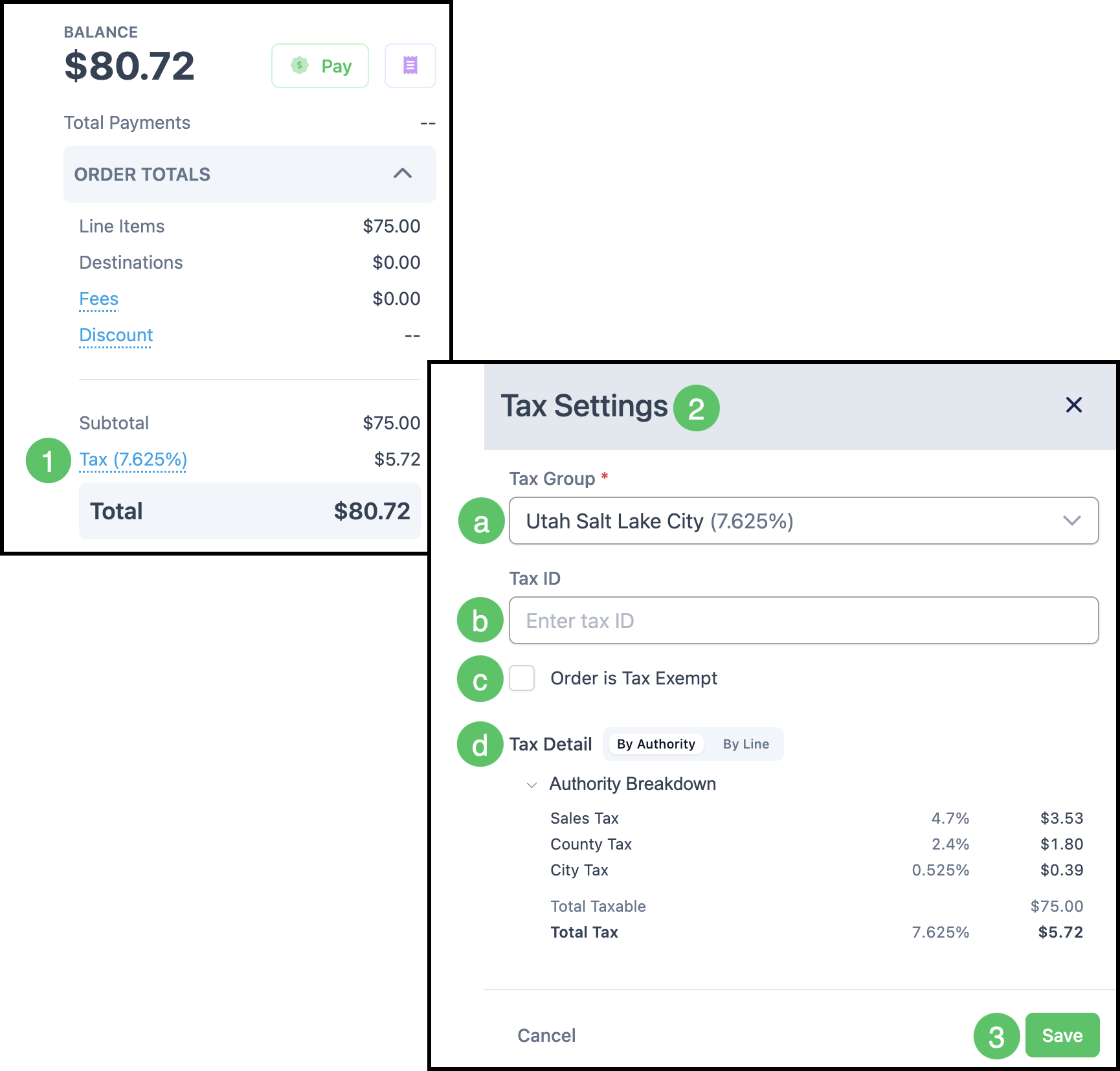
Updating Tax:
1. Click the Tax link.
2. Update the Tax Settings.
Note: These can be managed in System Settings / Accounting / Tax Groups.
a. Tax Group - The Tax Group assigned to this record.
b. Tax ID - Optional. The Customer tax ID, when you have one to record.
c. Order is Tax Exempt - Marks the record as tax exempt.
d. Tax Detail - Choose By Authority or By Line. Expand Authority Breakdown to see each tax amount.
Note: The authorities listed depend on the Tax Group on the Order.
3. Click Save.
Taking a Payment:
For more information, please see Payment Methods.
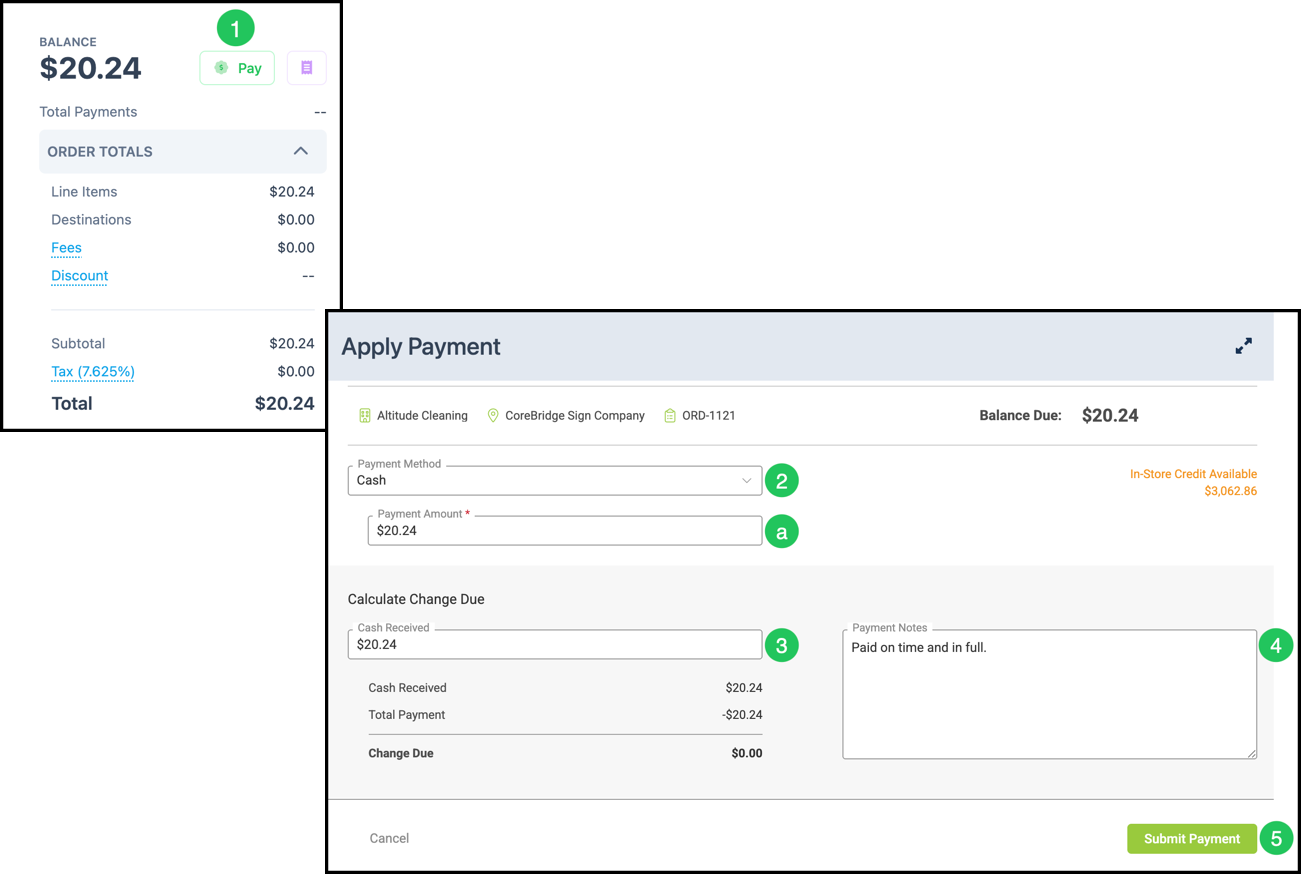
1. Click the Pay icon.
2. Select the Payment Method from the dropdown.
a. The Payment Amount. automatically populates with the Balance Due, but can be adjusted.
3. Enter any method-specific details.
4. Enter Payment Notes, if appropriate.
5. Click Submit Payment.
Payment History:
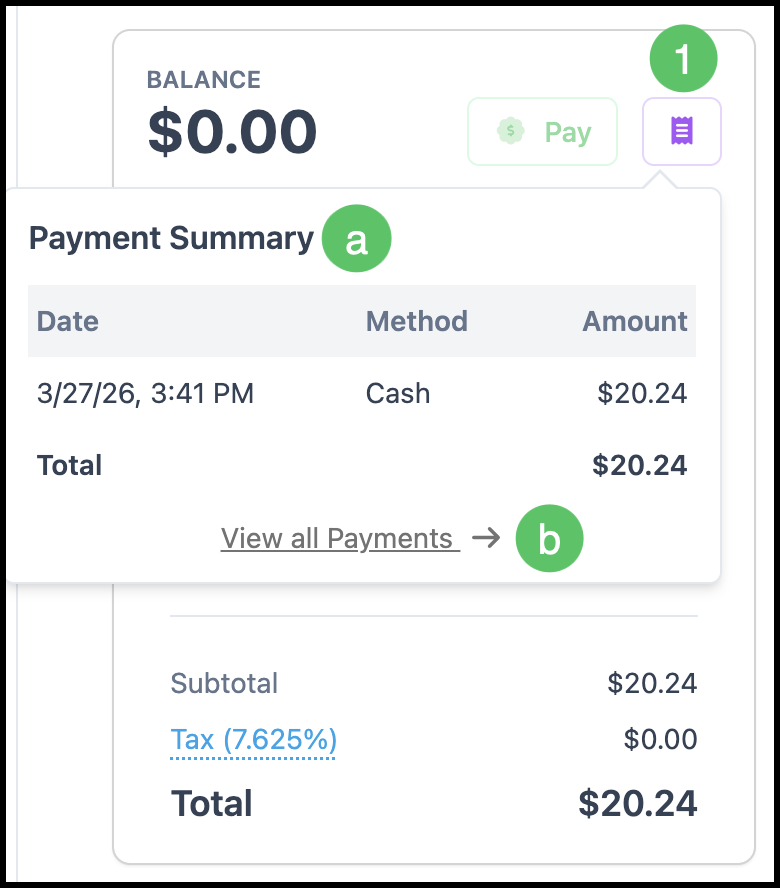
1. Click the Payment History icon.
a. This shows the payments made on this particular Order.
b. Clicking this link takes you to Accounting / Make Payments.
Additional Line Items
After creating the initial Order, additional Line Items can be added or copied from the Clipboard. This can be done immediately, or by opening an existing Order as shown below.
Navigate to Sales / Orders and select the appropriate Order.
Using the Line Item button:
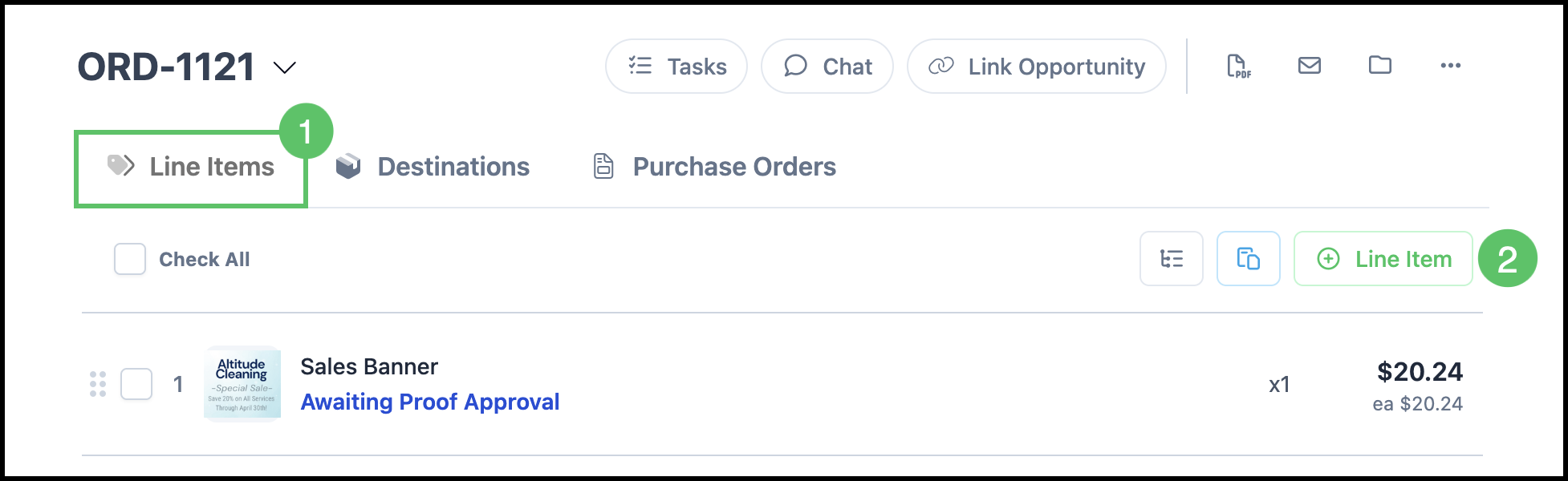
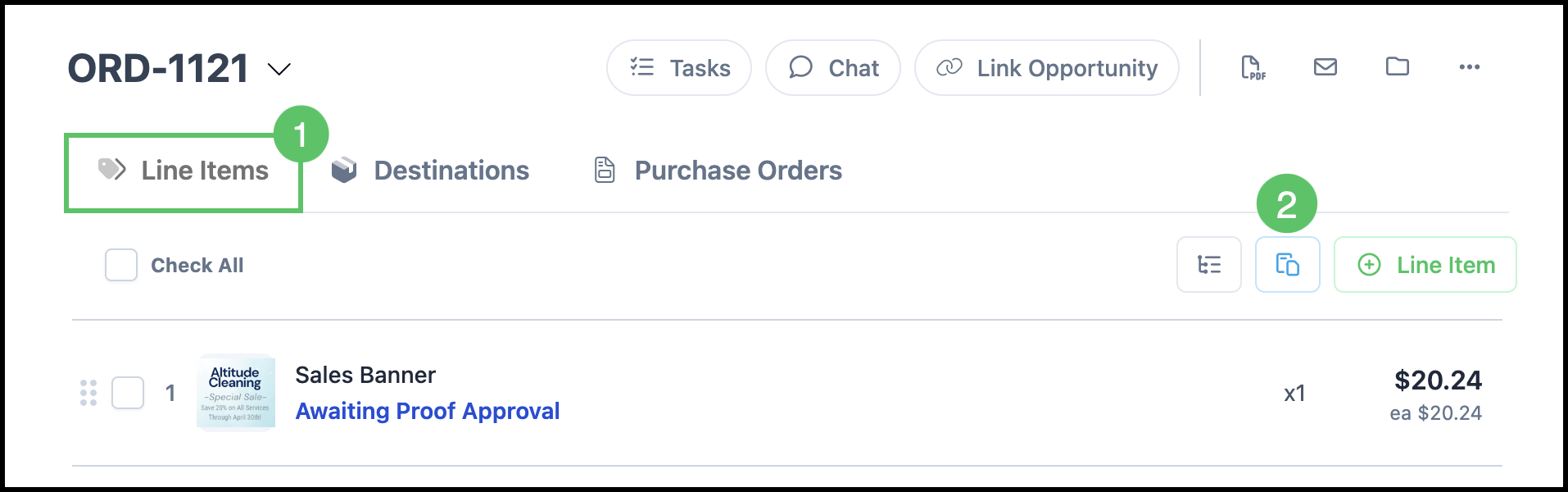
1. Select the Line Items tab.
2. Click Line Item.
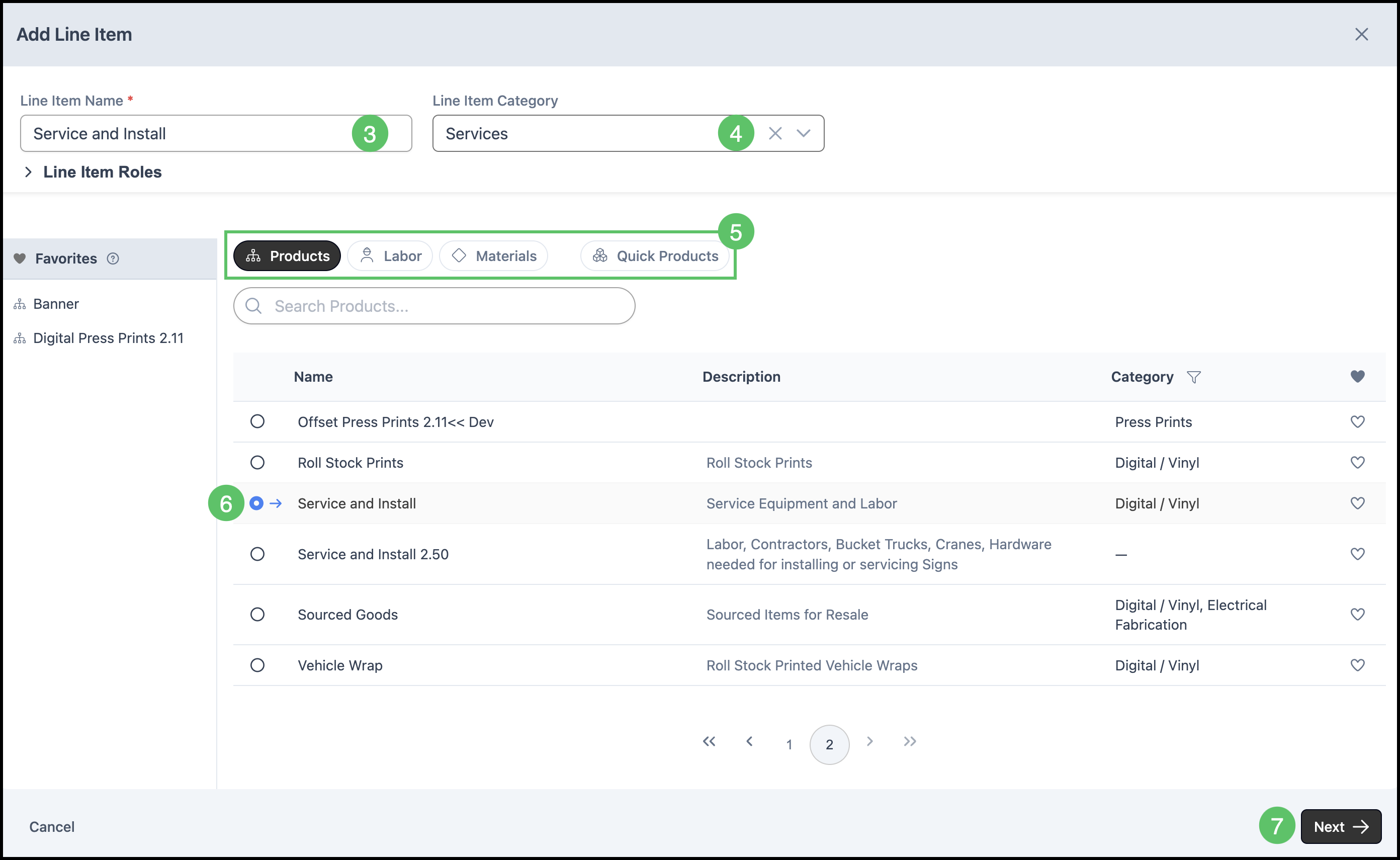
3. Enter Line Item Name.
4. Enter Line Item Category, if applicable.
Note: The options to include and/or require a Line Item Category at this stage can be managed in Settings / Sales Settings / Estimate and Order Options / Orders.
5. Select the appropriate Components tab.
a. Quick Products - Pre-created products to be used in Orders.
b. Assemblies - A customized combination of Machines, Labors and Materials.
c. Labors - Different types of labors needed for a product to be created.
d. Materials - Physical products sold by the business, or that will be used to create a product for a customer Order.
6. Select the specific Component.
7. Click Next.
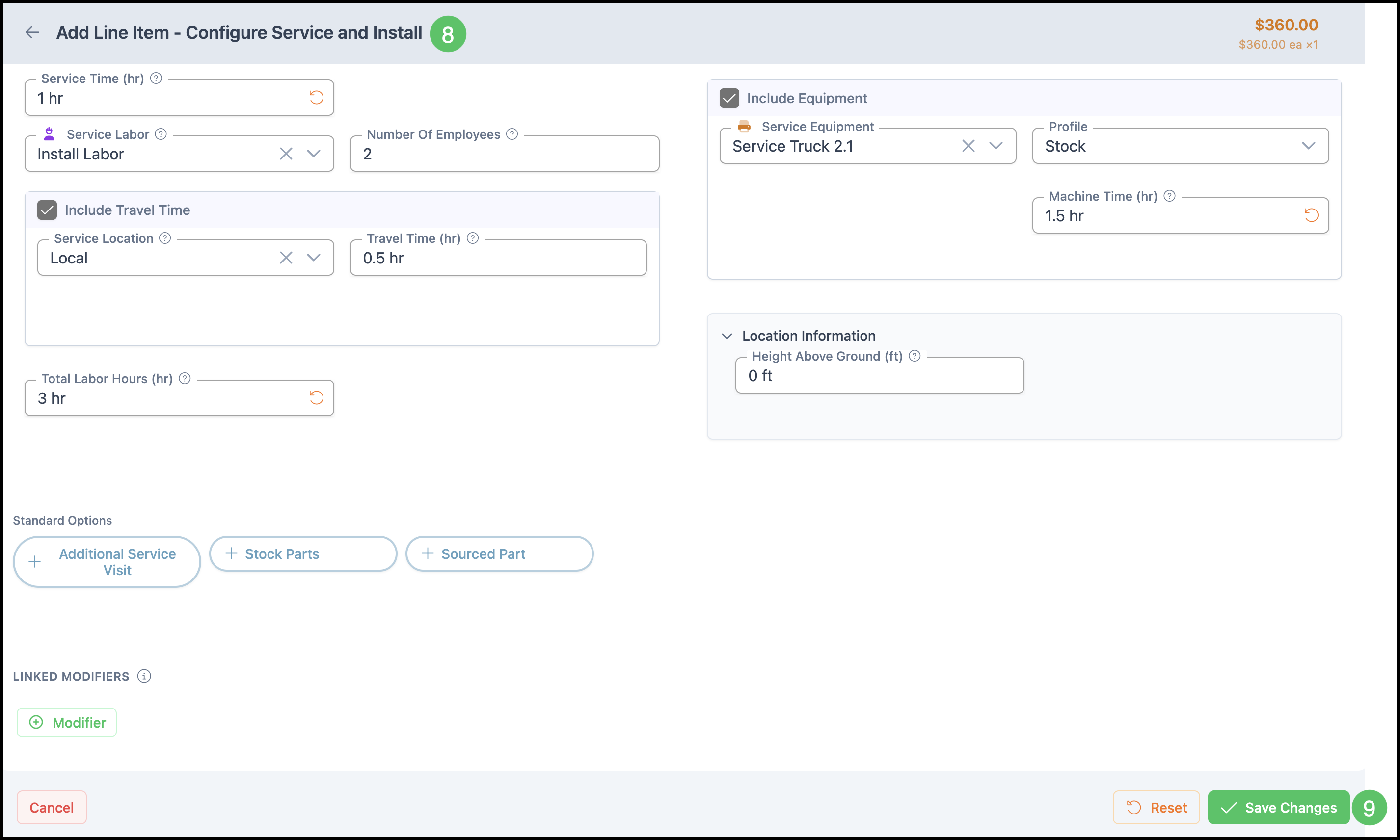
8. Enter the Component Details.
Note: These fields will vary depending on the selected Component.
9. Click Save Changes.
Using the Clipboard icon:
For more information, please see Clipboard Feature.
1. Select the Line Items tab.
2. Click the Clipboard icon.
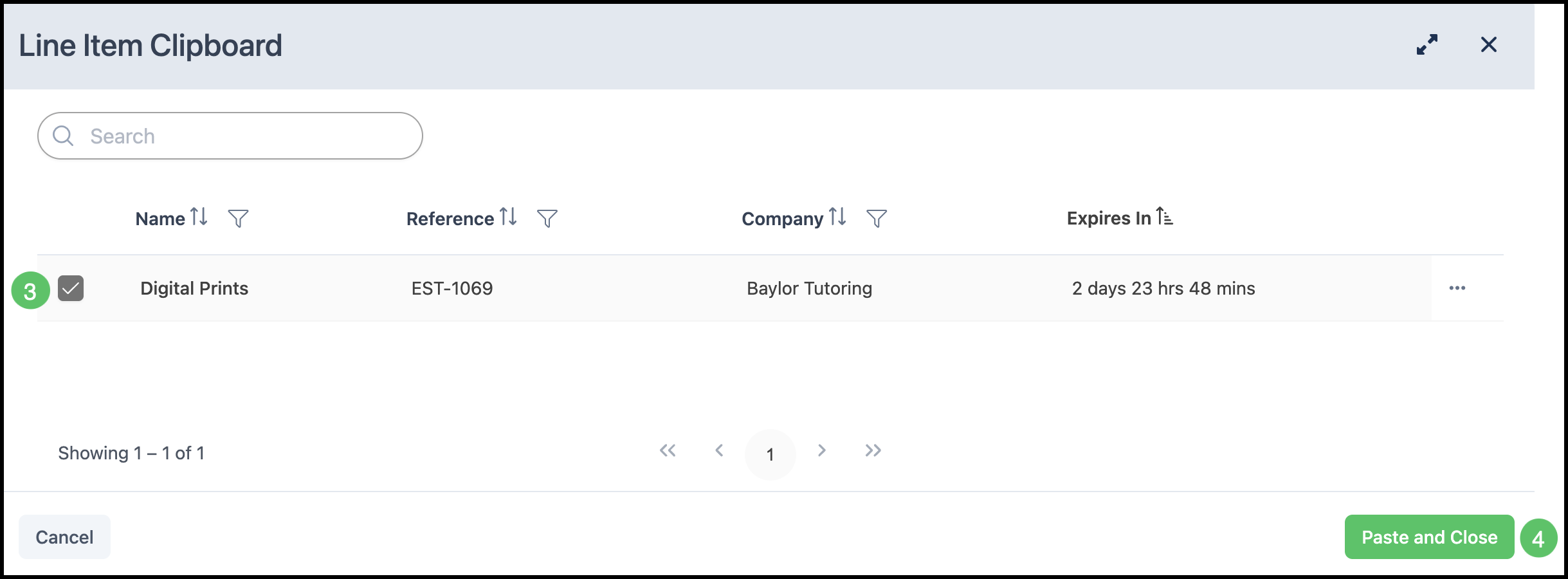
3. Select the item from the Clipboard.
Note: Items in the Clipboard are user specific and are available for three days.
4. Click Paste and Close.
Adding Proofs
Proofs allow the Customer to review artwork or mockups before the Order is created.
Navigate to Sales / Orders and select the appropriate Order.
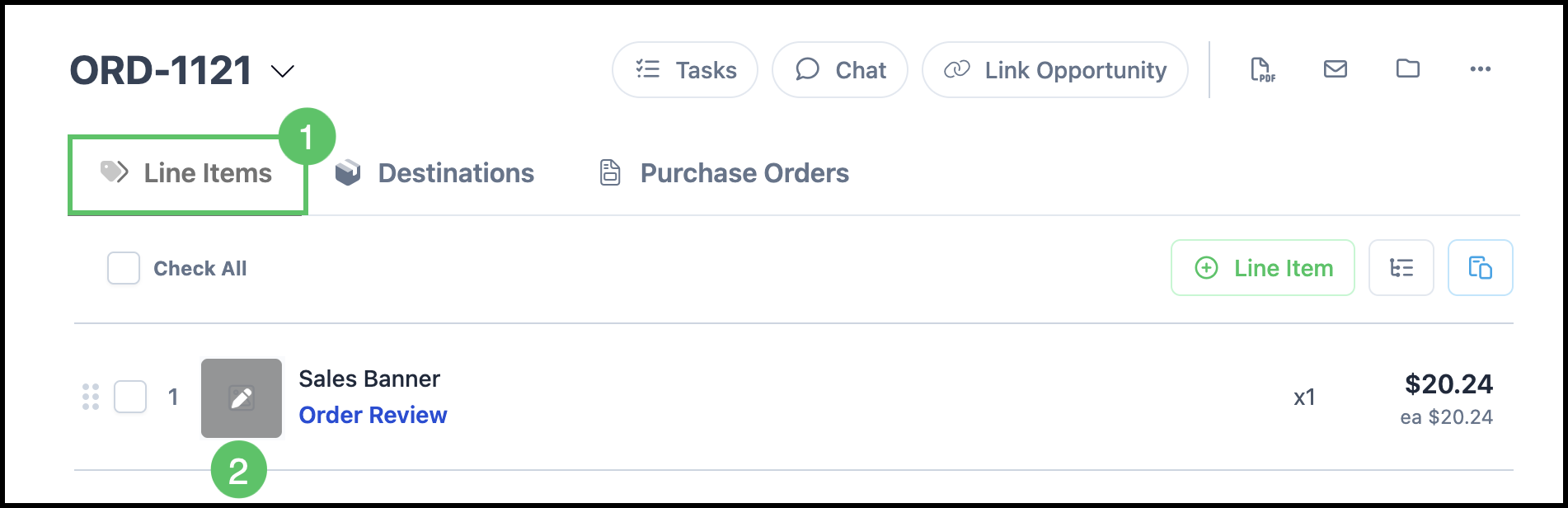
1. Select the Line Items tab.
2. Click the Edit icon that appears when hovering over the proof preview.
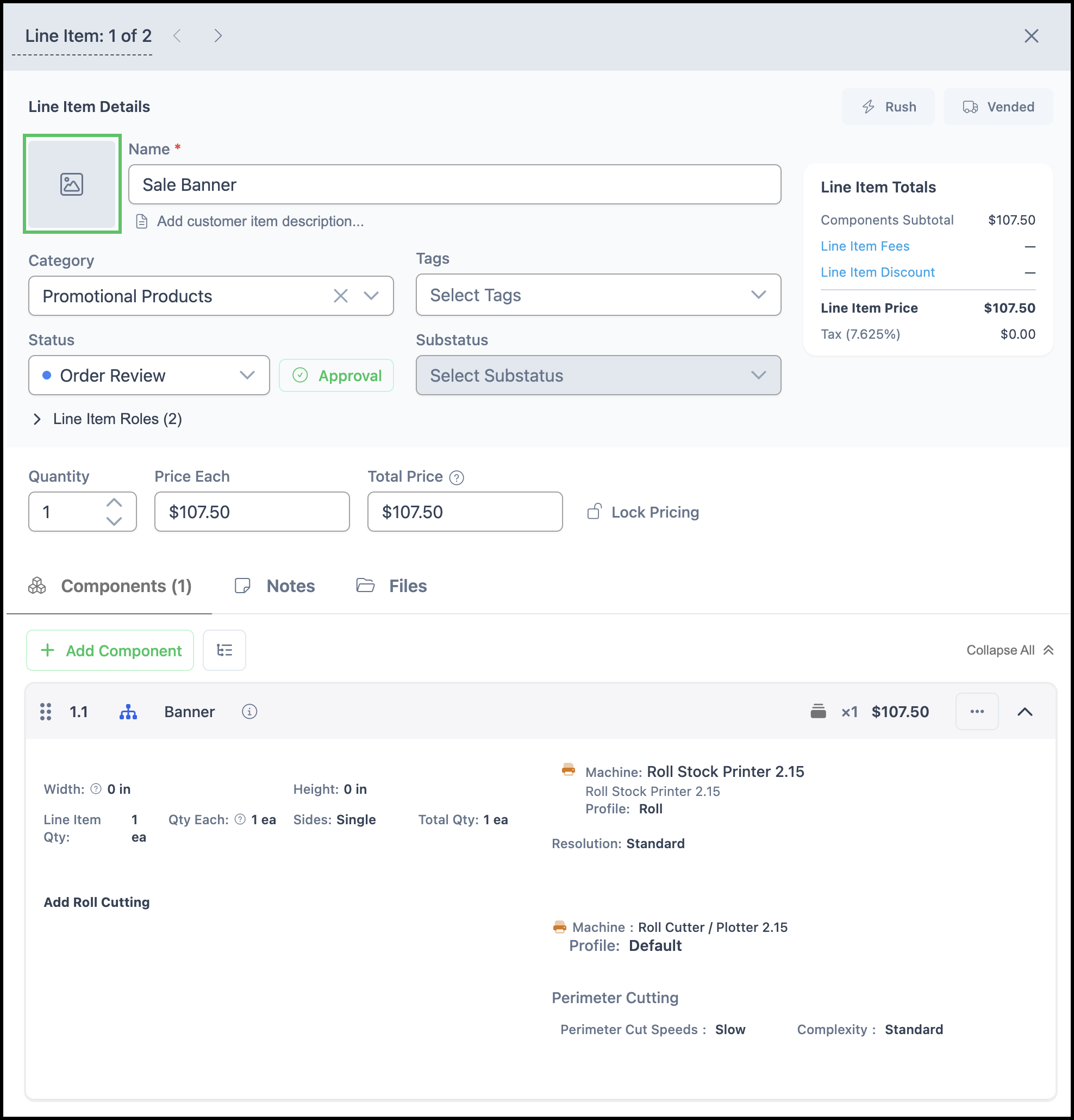
Note: You can also open up the Line Item and click the Proofing icon. See example below.
Example:
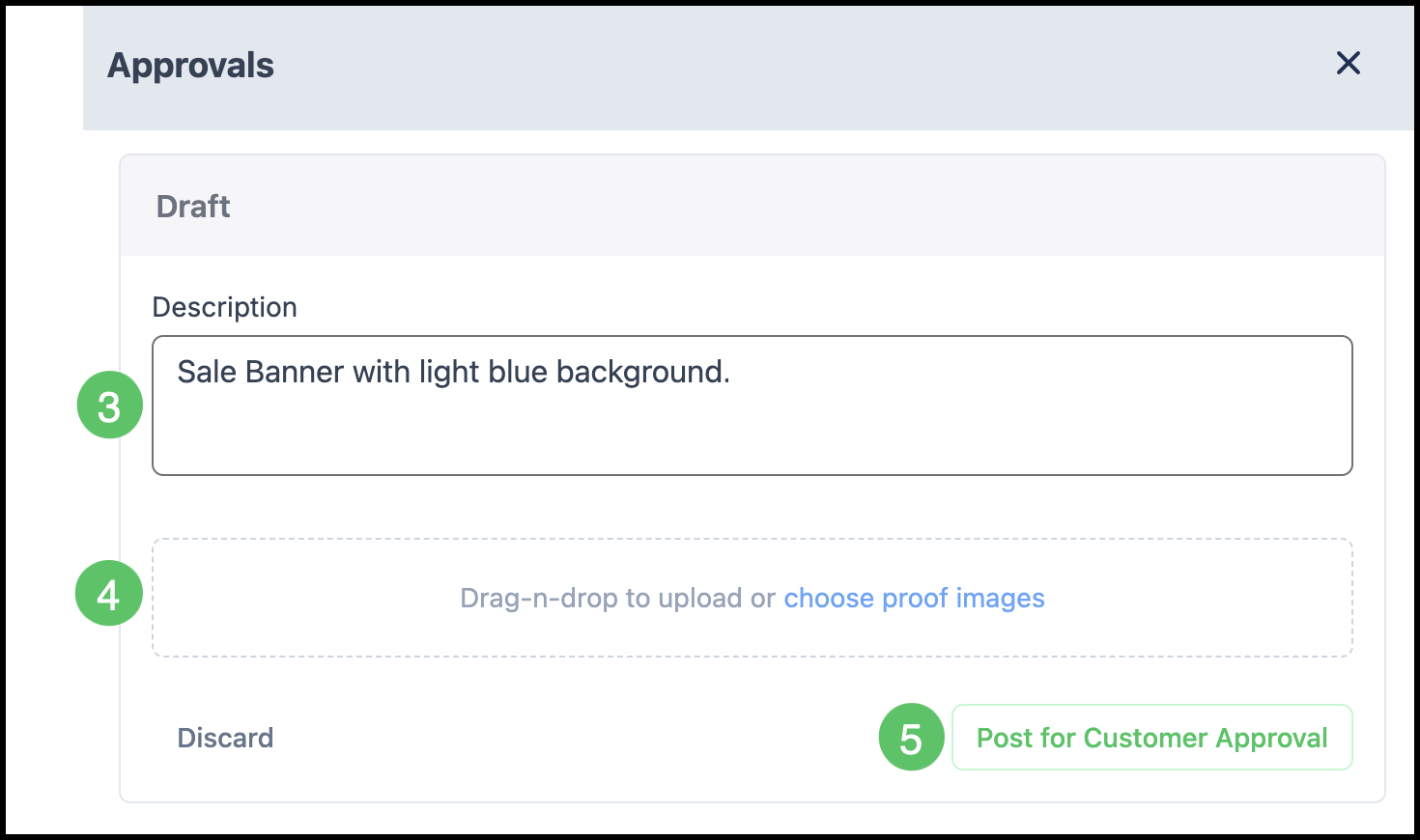
3. Enter a Description, if desired.
Note: This is Customer facing.
4. Select method for importing image.
5. Click Post for Customer Approval, if applicable.
Note: Follow this same process for updating proofs as well.
Note: Once proofs are added, you can send the Order (and proofs) to the Customer via email or the Customer Portal for review and approval.
Proof Approval
When the Customer needs to review proofs, you can email them the Order along with any associated proofs. From the email, the Customer can view the Order, review proofs, and either approve or request changes.
Navigate to Sales / Orders and select the appropriate Order.
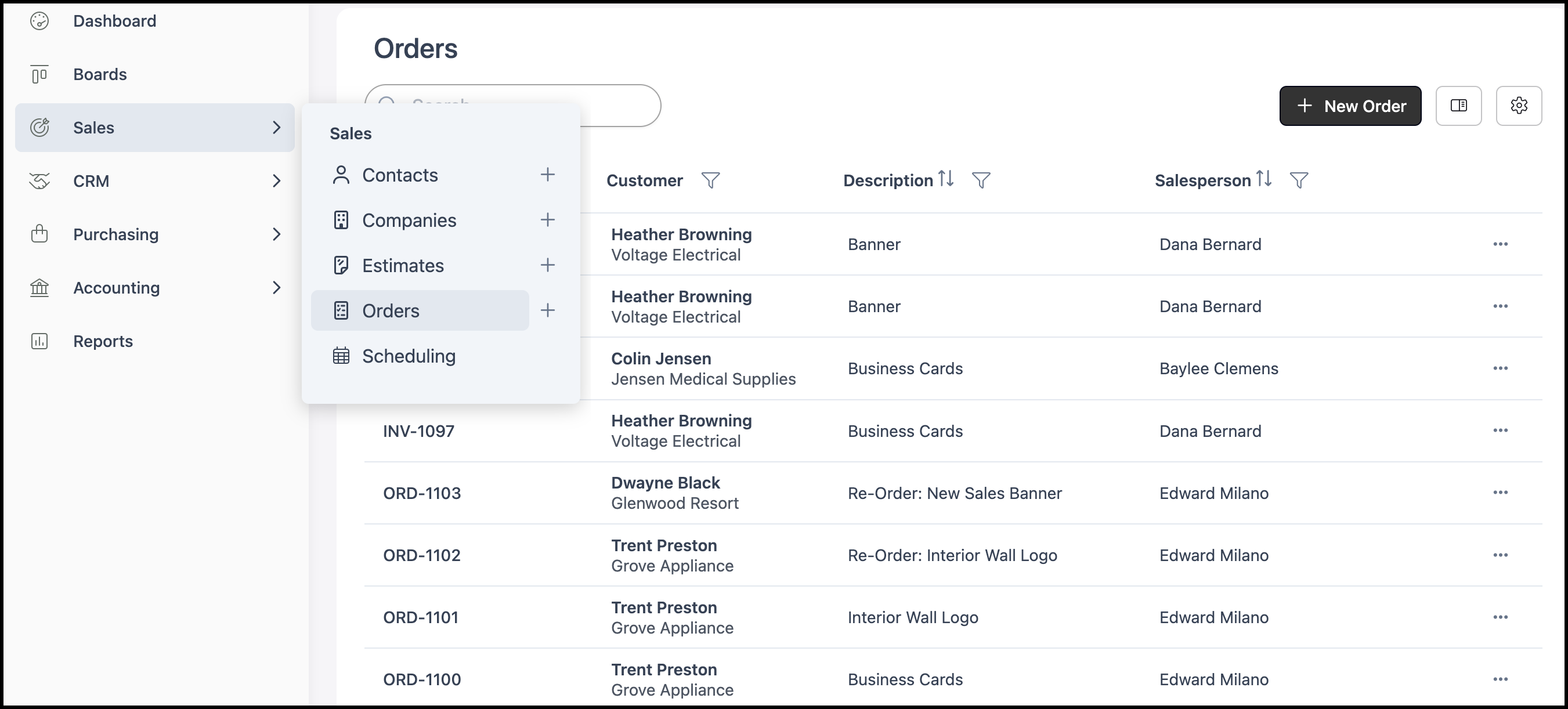
1. Click the Email icon.
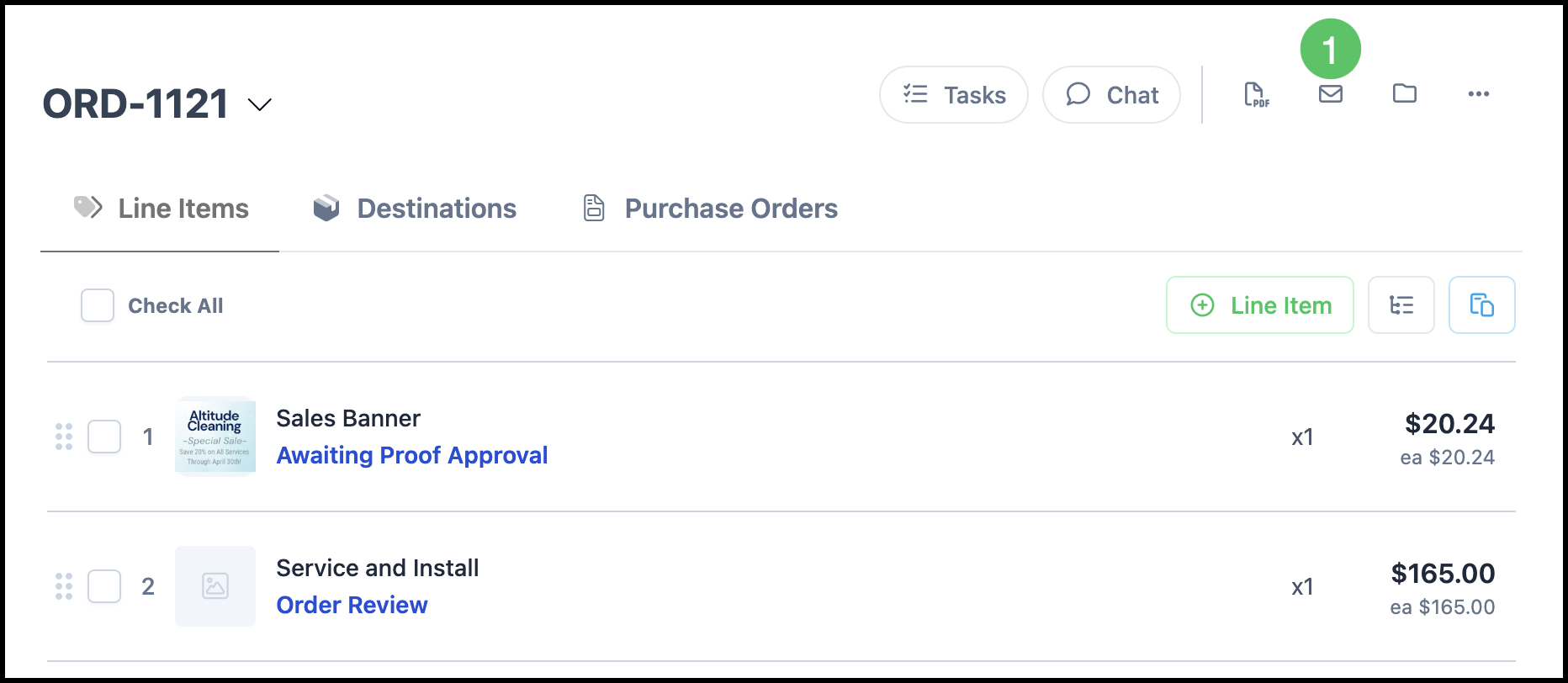
2. Select the Email Template or Blank.
a. Email Templates can be set up to automatically include attachments such as the Order. Or, you can manually add the attachment by clicking the attachment icon.
b. Email Templates can be created to include a link to the Customer Portal where the Customer can view the Order and Proof online. For more information, please see Creating and Editing Email Templates.
3. Select the Email From Address in the dropdown.
Note: Email From Addresses can be managed in Settings / System / Email From Addresses. For more information, please see Adding Email From Addresses.
4. Click Send Email.
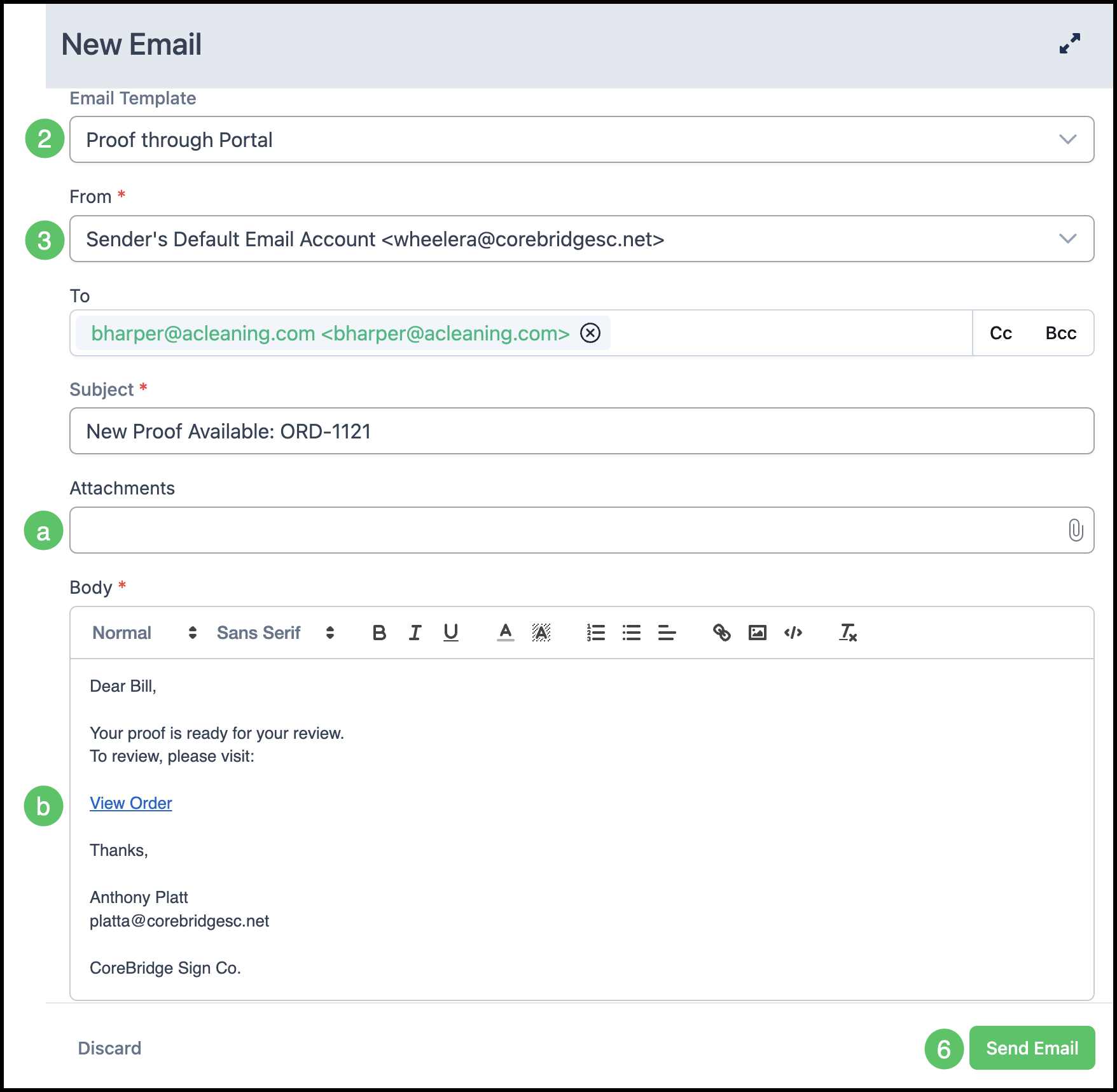
Destinations
The Destinations tab shows how the product will be delivered or transported to the Customer (e.g., pickup, ship). Destinations represent delivery or workflow stages.
Note: Destinations can be managed in Settings / Workflow / Destination Options.
Navigate to Sales / Orders and select the appropriate Order.
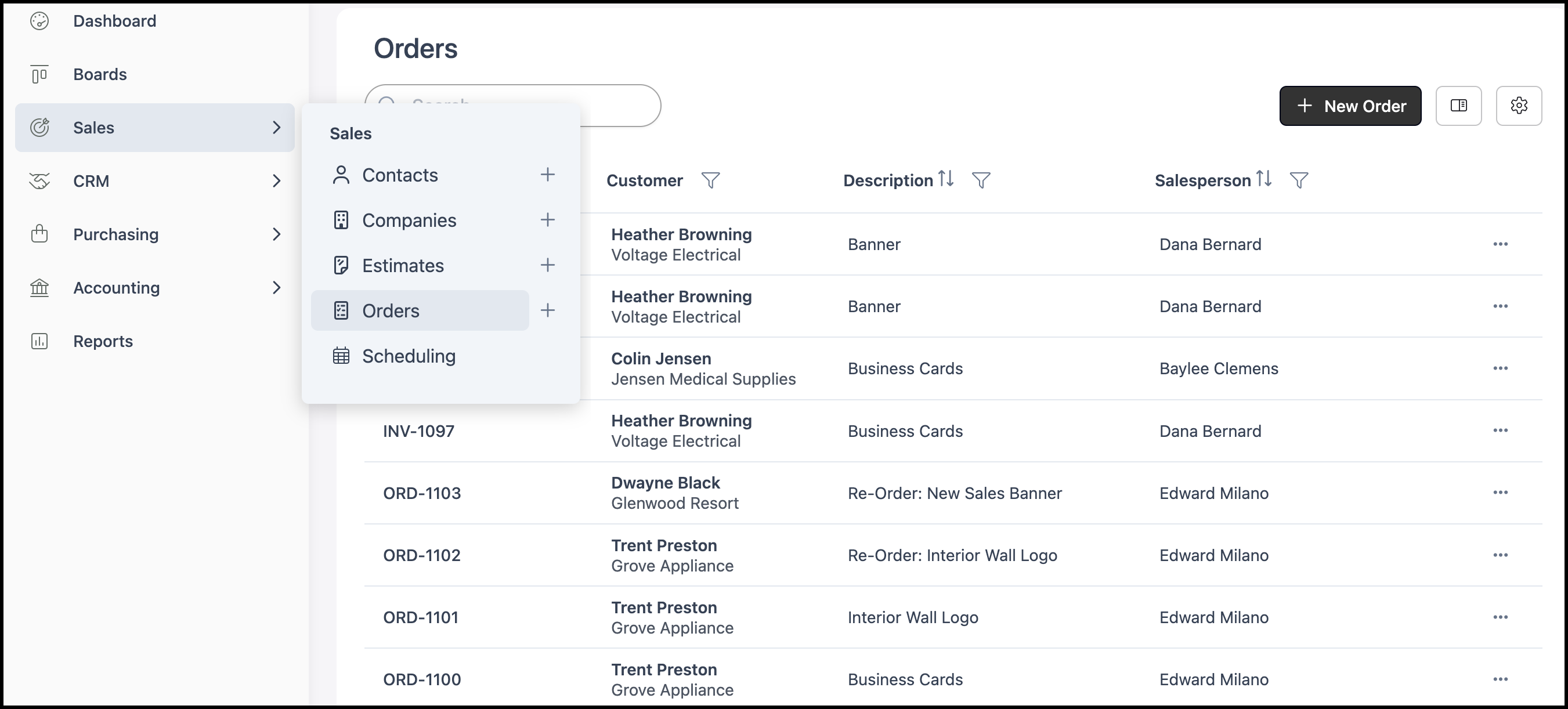
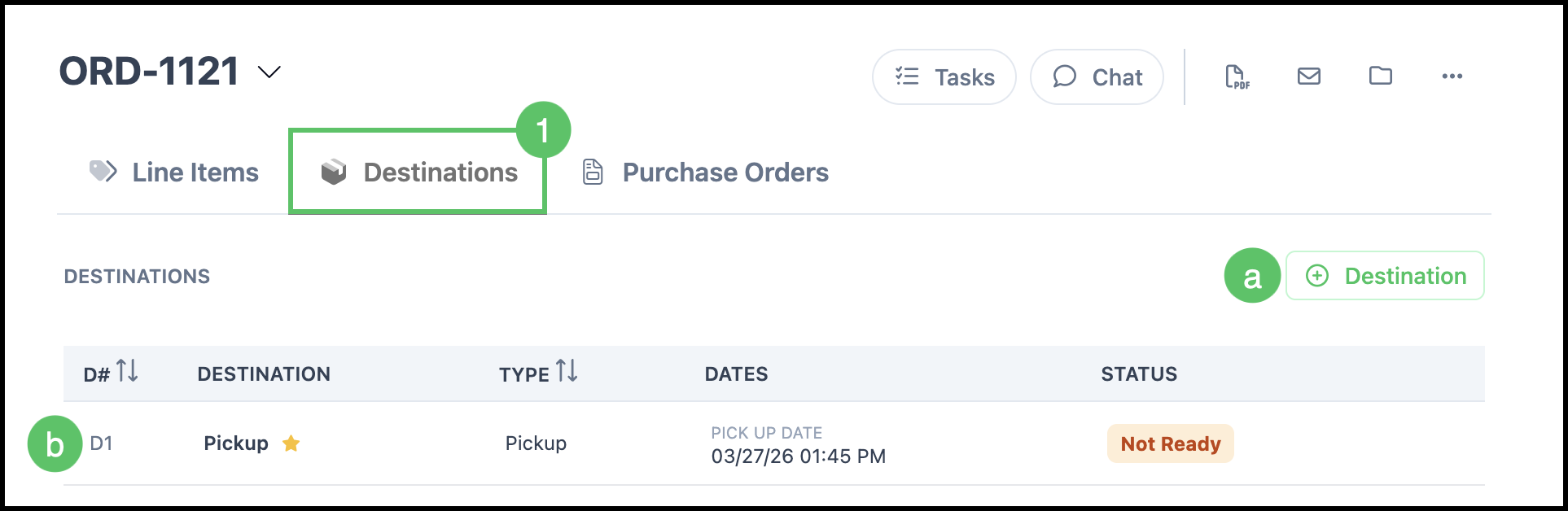
1. Select the Destinations tab.
a. Destinations can be added here.
Note: Multiple Destinations can be utilized for Orders that include multiple items going out to different locations or being delivered to the Customer in more than one way.
b. Destinations can be edited and updated by clicking on the Destination row. See Destinations Example below.
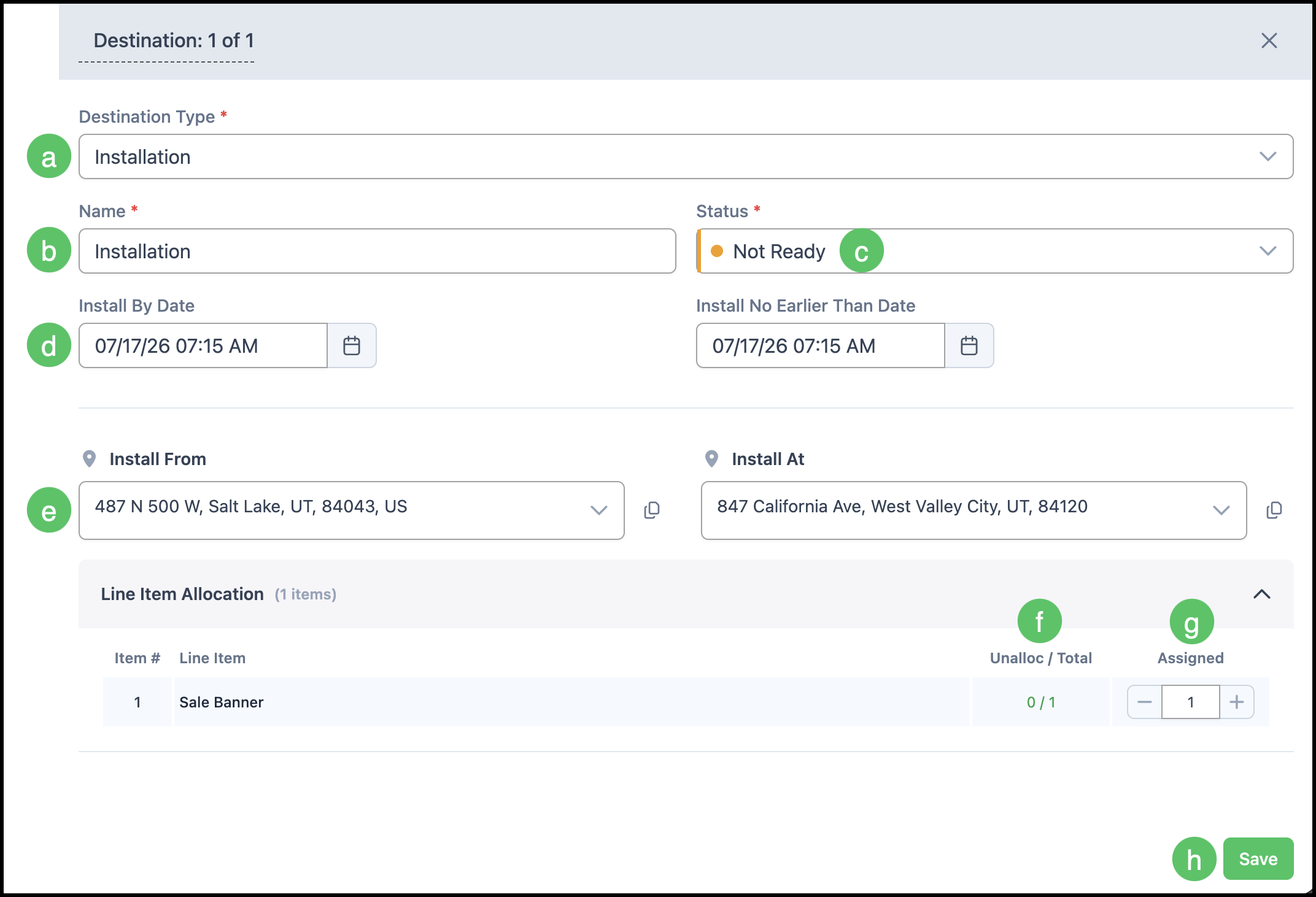
Destinations Example:
Note: Some of these fields may appear differently depending on the Destination Type selected.
a. Destination Type - Destination Types can be managed in Settings / Workflow / Destination Options.
b. Name -This name should make sense with the Destination Type.
c. Status - This can be manually updated here.
d. Date - This can be adjusted using the calendar dropdown.
e. Address - This can be adjusted using the dropdown.
f. Allocation Totals -This display shows allocation status for the item. The top number indicates how many units are not yet assigned to a destination, and the bottom number shows the total quantity for the item.
g. Assigned - This number indicates how many have been assigned to this Destination.
Note: When lowering the total quantity, the allocated quantity and the Line Item quantity must remain in sync. Reduce the allocated quantity first, then update the Line Item quantity.
h. Changes made to this panel must be manually saved.
Purchase Orders
The Purchase Orders tab shows vendor purchase orders linked to this Order. These are orders for goods or services that need to be purchased from a vendor to fulfill the Order.
Navigate to Sales / Orders and select the appropriate Order.
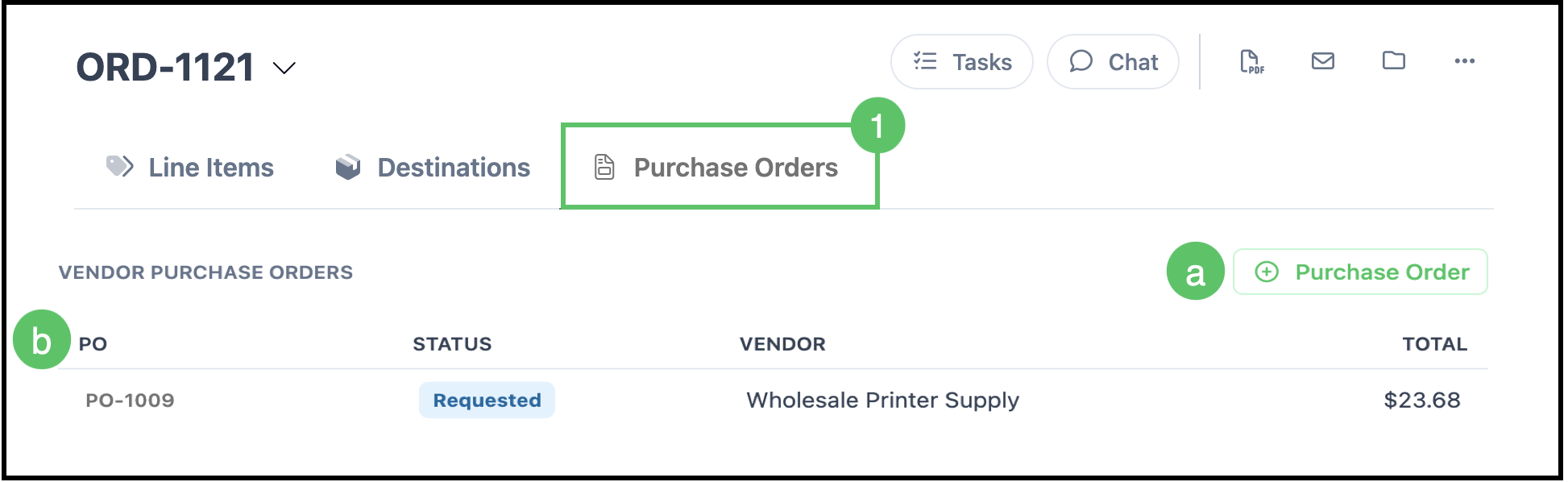
1. Select the Purchase Orders tab.
a. Use the Add Purchase Order button in this tab to create a new Vendor Purchase Order for this Order when the option is available.
b. The list displays columns such as PO (purchase order number), Status, Vendor, and Total. If there are no Vendor Purchase Orders yet, the list will indicate that.
Frequently Asked Questions
1. After I select a Customer, why does the list show only that Company?
Answer: After you select a Company and Contact, Select Customer shows contacts for that Company only. Clear the field to search all customers again.
2. Does setting Status to Approved convert the Estimate to an Order?
Answer: No. Click Approve & Convert to Order on the Estimate. Setting Status to Approved does not convert it.
Related Articles
Creating and Editing Email Templates